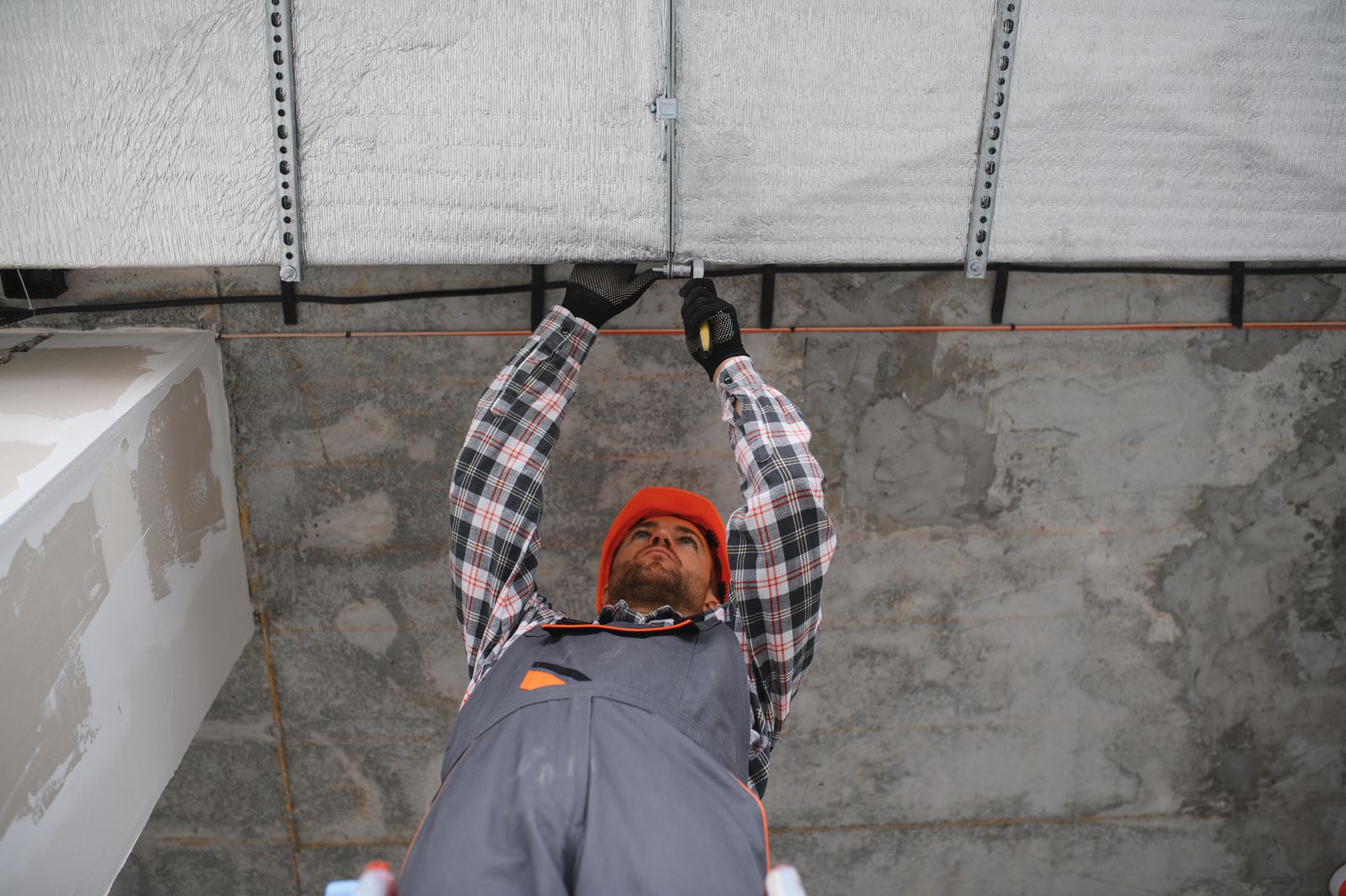
Post-construction duct cleanup removes drywall dust, silica fines, sawdust, and jobsite debris that renovation and new-build work push into supply and return ducts. The EPA lists visible post-renovation debris among legitimate reasons to clean ductwork. DuctDove connects you with a local, independent duct tech through one toll-free call — a referral only; we perform no work ourselves.
📞 Call (866) 370-5390Find your cityPost-construction jobs invite a particular bait: the debris is real and visible, so a tech has instant credibility — and some spend it on add-ons the dust does not justify. Watch for a sanitizing or fogging pitch stapled to a drywall-dust job; dust is removed mechanically, and chemicals add nothing to that. Watch for an on-the-spot mold test in a system that is dusty, not damp. Watch for whole-system duct replacement quoted where cleaning would do, justified by photos you cannot verify against your own vents. Your counters: ask for an itemized scope — runs, blower, coil; see your registers before and after; let the visible debris define the job. The mess is real, which is exactly why nothing needs to be added to it.
Because the return side of an HVAC system is, functionally, a vacuum intake for the whole house. Any time the system runs during construction, returns pull airborne dust straight into the ductwork, through the filter — which catches some of it — and onto the blower, coil, and supply runs beyond. Even with the system off, open registers act as floor-level and wall-level catch basins for sanding dust, sawdust, and debris that crews sweep past them. New builds have their own version: ducts often sit open-ended for weeks while drywall is hung, mudded, and sanded around them. None of this reflects a bad contractor, necessarily; it reflects physics and sequencing. It does mean that after significant work, the duct system holds a sample of everything the project produced.
Two properties set construction dust apart from household dust. First, fineness: sanded joint compound and cut concrete or tile produce particles fine enough to stay airborne for hours, pass partway through ordinary filters, and settle in a uniform film across duct interiors, blower blades, and coil fins. Second, abrasiveness and persistence — silica fines from masonry, tile, and concrete cutting are hard mineral particles that do not break down and are notoriously difficult to capture once distributed. On equipment, the film matters: a coated evaporator coil transfers heat poorly, a loaded blower wheel moves less air, and a system doing both works harder to deliver the same comfort. The result shows up as dust that keeps reappearing on surfaces and a system that seems to have aged years during a months-long project.
Yes — and given how skeptical the EPA is about routine duct cleaning, that endorsement is worth something. The agency's guidance declines to recommend cleaning on a schedule and states plainly that value has not been demonstrated for the average home. But it lists specific situations where cleaning is reasonable, and visible debris in ducts — with particles actually releasing from supply registers — is on that short list, which is exactly the post-construction scenario. The EPA notes duct cleaning has never been shown to prevent health problems; our case for this service does not rest on any such claim. It rests on observable facts: measurable debris in the system, dust discharging from registers, and equipment coated in construction fines. That is the honest, narrow ground on which post-construction cleanup stands.
After — specifically, after the last dust-producing trade has finished. The costly mistake is sequencing duct cleaning in the middle of a project because the mess feels urgent; sanding, grinding, or tile work performed afterward simply recontaminates the system, and you pay for the same cleaning twice. The right slot is late in the punch-list phase: drywall sanded, floors finished, paint done, final cleaning underway or complete. For remodels, that means booking the duct visit as one of the final line items. For new builds, it ideally happens before move-in, once trades are out. If the project timeline is uncertain, tell the tech; most would rather schedule you correctly than clean a system twice. When you call DuctDove, mention where the project stands and we will factor that into the referral.
The handoff is the transition when a builder or general contractor turns the finished project over to you, typically with a walkthrough and a punch list. Ducts deserve explicit treatment in that conversation, because responsibility for construction debris in the system is negotiable before closing and awkward after. Reasonable asks: confirmation of whether the HVAC system ran during dusty phases and whether registers and returns were covered; a fresh filter installed at completion — construction filters are considered consumed by the project; visual inspection of accessible returns and trunk lines; and clarity on who pays for duct cleaning if debris is present. Some builders include a cleaning; many do not. Either answer is workable — what you want is the answer in writing before the keys change hands, not a discovery afterward.
Cheap measures, applied early, prevent most of the problem. Cover every supply register and return grille in the work area with magnetic covers, taped plastic film, or purpose-made adhesive covers — returns matter most, since they actively pull air in whenever the system runs. Ask the contractor to isolate the work zone with plastic sheeting and, ideally, to run their own filtered air scrubber rather than borrowing your HVAC system for dust control. Step up the filter: a higher-efficiency pleated filter during the project, checked and swapped far more often than usual — monthly at minimum during heavy phases, because construction dust loads a filter in days, not months. Write these expectations into the contract if you can. Covers and filters are trivial line items on any project budget — prevention here costs almost nothing next to remediation.
Ideally, no — not during dust-producing phases. Every hour the blower runs, the returns inhale jobsite air and distribute fines through the system and into rooms the project never touched. The practical reality is that projects span seasons, and shutting the system down for a summer or winter is not always livable. The workable compromise: keep the system off during sanding, cutting, grinding, and demolition specifically; seal returns in the work zone so runtime elsewhere pulls from clean areas; upgrade and frequently replace the filter; and have the contractor manage dust at the source with containment and scrubbers. On new builds, ask the builder whether the system ran before drywall sanding was complete — the answer tells you a lot about what is in the ducts. Whatever the runtime history, it becomes useful information for the tech who eventually cleans the system.
A legitimate post-construction cleanup treats the system, not just the ducts you can see into. The tech puts the ductwork under negative pressure with a vacuum collection unit, then works through supply and return runs with agitation tools — rotary brushes, air whips, compressed-air skipper balls — pushing debris toward the vacuum rather than into the house. Registers and grilles come off and get cleaned. The parts homeowners forget are often the parts that matter most: the return plenum and trunk lines where heavy debris settles, the blower compartment and wheel, and the evaporator coil if inspection shows it coated. A fresh filter goes in at the end, after the work, so it starts clean. Ask any tech to walk you through which of these their quote includes — the answer separates a system cleaning from a register wipe-down.
No, for two structural reasons. First, a filter only treats air that passes through it: debris that settled in supply runs downstream of the filter, in the return trunk upstream of it, or on registers never gets a chance to be captured. Sanding dust that fell through a floor register sits in the boot until something removes it. Second, capture efficiency has limits — the finest drywall and silica particles partially penetrate ordinary residential filters, and a filter loaded with construction dust chokes airflow long before the project ends, which is its own problem for the equipment. Filters are essential during construction as a harm-reduction measure and should be swapped aggressively. But a filter is a screen, not a cleaning method. What is already distributed through the ductwork stays there until it is mechanically removed.
The signs are refreshingly concrete. Visible dust puffing from supply registers when the system starts — sometimes dramatic the first few cycles after a project. A gray or white film that returns to furniture and floors within a day or two of dusting, long after the crew left. Grit, drywall crumbs, screws, or sawdust visible inside floor registers when you lift the grille. A filter that turns gray in days. Registers and grille edges rimmed with fine pale dust. Weaker airflow from some vents than you remember. Any of these after a renovation, or in a newly built house, matches the debris-release scenario the EPA lists among legitimate cleaning triggers. Take photos of what you see — they are useful when you call, and useful again when the tech quotes the scope on site.
Often, yes — counterintuitive as that is when everything else gleams. Duct systems are installed early, at rough-in, and then sit through months of drywall hanging and sanding, floor cutting, tile work, paint, and sweeping. Open-ended runs collect whatever falls or drifts in; some builders cap ducts during construction, many do not. It is routine for techs to pull drywall chunks, joint-compound dust, sawdust, fast-food wrappers, and hardware out of never-used systems. New-home buyers reasonably assume the final clean covered the ducts; it almost never does — construction cleaning crews handle surfaces, not duct interiors. A quick self-check costs nothing: lift a couple of floor registers and look with a flashlight, and check the filter's condition. If you find debris, a one-time cleanup before or shortly after move-in starts the system on a clean baseline.
One toll-free call, and our only product is the match: a local, independent duct tech suited to your situation. DuctDove performs no cleaning, sells no packages, and takes nothing from add-ons — we are a referral service and we say so plainly, here and everywhere. For post-construction work, a few details sharpen the referral: the scope of the project, whether the system ran during dusty phases, whether registers were covered, and where the timeline stands — mid-project calls get scheduling advice, not just a name. The tech who takes the job scopes it on site, walks the system, and quotes before working. Bring the photos of your registers, ask which components the quote covers, and read our upsell-watch card below so the visit stays about the debris that is actually there.
Call our toll-free line and tell us about the project — remodel or new build, what trades were involved, and whether the system ran during the work.
We match you with a local, independent duct tech equipped for construction debris. DuctDove performs no work itself, and we say so plainly.
The tech scopes the system on site — registers, returns, trunk lines, blower, coil — and gives you an itemized quote before anything starts.
The cleanup is done right: negative-pressure vacuum, agitation through supply and return runs, equipment cleaned as needed, fresh filter in last.
This is one of the few scenarios with mainstream backing. The EPA, generally skeptical of routine duct cleaning, lists visible debris in ducts — with particles releasing from registers — among the situations where cleaning is reasonable. Post-construction dust is the textbook case. Verify it yourself: lift a register and look.
After the last dust-producing trade finishes — sanding, cutting, grinding, demolition — and ideally during the final punch-list phase or just before move-in on a new build. Cleaning mid-project wastes the visit, because later work recontaminates the system and you end up paying for the same cleanup twice.
Call our toll-free line and describe the project — remodel or new build, which trades, whether the system ran. DuctDove matches you with a local, independent tech equipped for construction debris. We are a referral service only; we perform no cleaning ourselves, and we say so on every page.
It is negotiable, and the negotiation belongs before closing. Raise it at the walkthrough: ask whether the system ran during dusty phases, whether ducts were capped, and who covers cleaning if debris is present. Some builders include it; many do not. Get whichever answer you receive in writing.
No — that distributes the problem instead of solving it. The filter only treats air passing through it; debris settled in supply runs, return trunks, and register boots stays put, and the finest drywall particles partially penetrate ordinary filters anyway. Mechanical cleaning removes what is there; a filter only screens what moves.
Magnetic sheets, taped plastic film, or adhesive covers that seal supply registers and return grilles during work. They are among the cheapest prevention available and returns are the priority, since returns actively pull air in whenever the blower runs. Covering vents before demolition beats cleaning ducts after it, every time.
Often, yes — availability varies by area and season, and scheduling happens directly between you and the tech we refer. Call DuctDove toll-free with your timeline; if your project is still producing dust, we would rather help you book the right week than the fastest one. The referral is free either way.
Silica fines come from cutting or grinding concrete, tile, brick, and stone — hard mineral particles, extremely fine and persistent, that settle throughout duct interiors and onto equipment. They are abrasive, they do not break down, and ordinary filters capture them incompletely, which is why jobs involving masonry or tile get flagged for thorough cleanup.
It should include an inspection of them, and cleaning where the coating warrants it. Construction fines settle on the blower wheel and evaporator coil, cutting airflow and heat transfer. Ask the tech directly whether the quote covers blower and coil, or ducts only — an itemized answer is the mark of a real scope.
Not automatically. If returns in the work zone were sealed and the system stayed off during dusty phases, contamination may be limited to nearby runs. A tech can inspect and quote a partial scope honestly. Dust discharging from registers far from the work area, though, suggests the blower spread it — inspection settles the question.
Scoped inspection, written quote, no scare-sell.
📞 (866) 370-5390🌀 Air Duct Cleaning🔥 Dryer Vent Cleaning❄️ HVAC Coil Cleaning🌬️ Furnace & Blower Cleaning🧰 Duct Sealing🔧 Duct Repair & Replacement🧱 Duct Insulation🍃 Sanitizing & Deodorizing🔍 Air Duct Inspection🏢 Commercial Duct Cleaning🧾 Duct Cleaning Cost Factors
 DuctDove