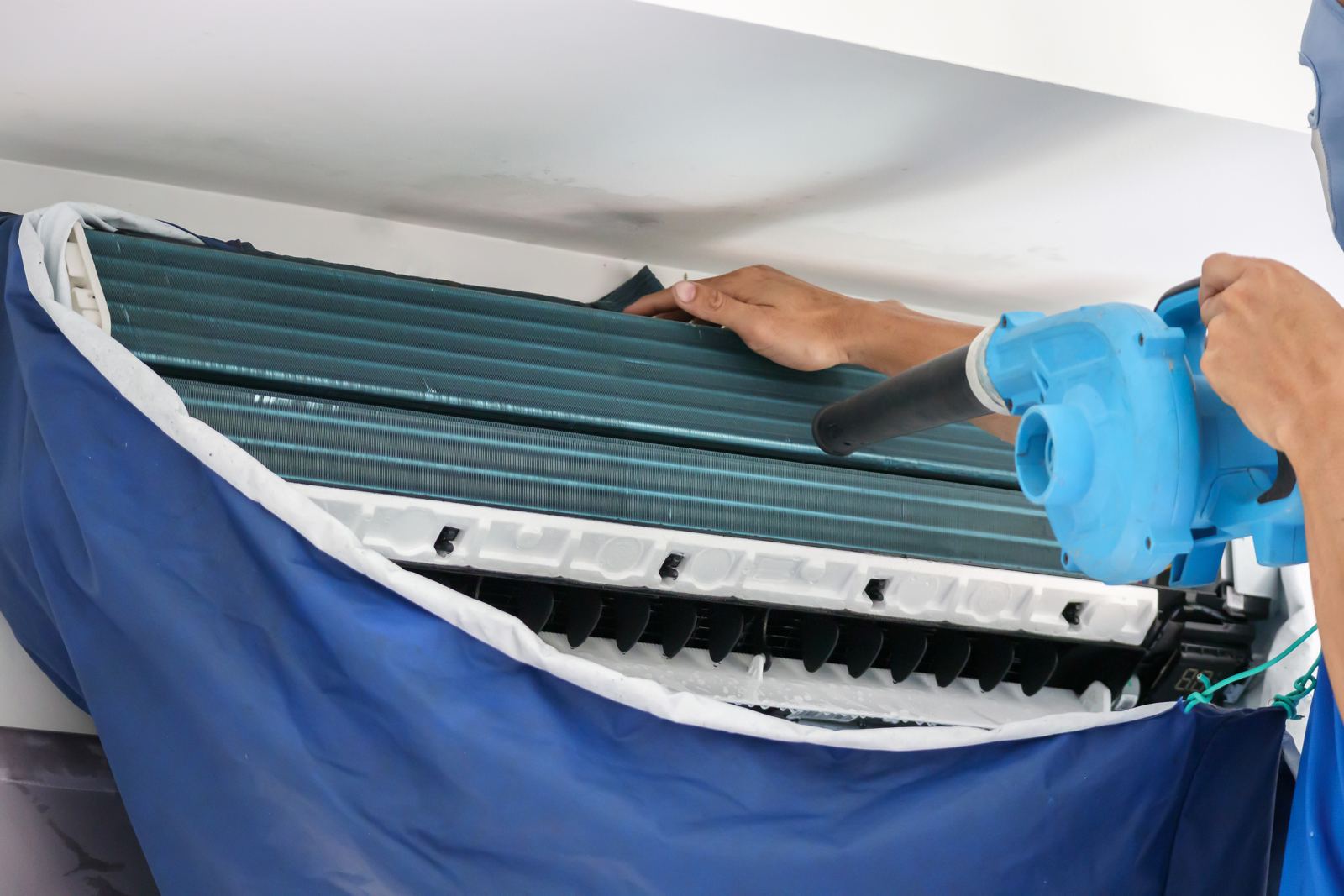
Air duct cleaning is the source removal of dust and debris from a home's supply and return ductwork, typically using negative-air vacuum collection with mechanical agitation. Per the EPA, it is warranted on specific evidence — visible mold, vermin, or clogged ducts — not on a calendar. DuctDove is a referral service that connects you with a local independent technician.
📞 Call (866) 370-5390Find your cityHere's how air duct cleaning goes wrong, so you can see it coming. It usually opens with coupon bait — a too-cheap whole-house special that no crew could profitably honor. On site, the price rebuilds itself through per-vent surprise math: each register, return, and trunk suddenly billed separately. Then comes the on-the-spot mold verdict, delivered with a flashlight and zero lab work, converting a modest cleaning into an urgent remediation invoice. Some crews close with shock photos of horrifying ducts — taken in someone else's house. Your defenses are boring and effective: a written scope before work, the method named, photos from your own ductwork with today's date, and a firm no to any diagnosis that skips the laboratory.
Air duct cleaning is the removal of dust, debris, and construction leftovers from the supply and return ductwork that carries air through your home. A thorough job covers more than the ducts themselves: registers, grilles, and — when included in scope — the blower and coil area of the HVAC system. The industry benchmark is source removal: put the whole duct run under vacuum, agitate the dirt loose, and capture it in a collection device rather than scattering it. That is the method NADCA's ACR Standard describes, and it is the standard the independent technicians in the DuctDove network are expected to explain before quoting. DuctDove itself performs no cleaning; we are a referral service that connects you with a local tech by phone.
A full air duct cleaning covers the entire air path: supply trunks and branch runs, return ducts, register and grille faces, and the drops behind them. Depending on the agreed scope, it may extend to the blower compartment and the evaporator coil, which are often quoted as add-ons. The technician should protect flooring, seal registers while the system is under vacuum, agitate each run, and reassemble everything they opened. Ask for the scope in writing before work begins — a legitimate quote names each component, so nothing becomes a surprise line item mid-job. Air duct cleaning that skips the returns or ignores the trunk line is a partial job sold at full price. DuctDove is a referral service: the local independent tech, not us, sets and performs that scope.
Professional air duct cleaning is built on source removal: loosen debris, then capture it. The most common setup is a negative-air machine — a large vacuum connected to the trunk line that puts the whole duct system under suction while the tech agitates each run with air whips, skipper balls, or brushes. The alternative is a rotary brush system paired with a vacuum that collects at the point of contact. Both are legitimate when agitation and collection work together; NADCA's ACR Standard describes exactly this pairing. What is not legitimate is the blow-and-go: a shop vacuum waved at each register for a few minutes, which redistributes dust rather than removing it. Ask any technician which method they use and where the debris ends up. A clear answer is a good sign.
A thorough air duct cleaning of a typical single-system home usually takes two to four hours; larger homes or multiple systems can run longer. The time goes into setup — protecting floors, cutting or using access points, connecting the vacuum — then agitating each supply and return run individually, and finally reassembly and cleanup. A crew that finishes a whole house in under an hour almost certainly performed surface work at the registers, not source removal in the ducts. Duration alone doesn't prove quality, but it is a useful sanity check on a quote. When DuctDove matches you with a local independent technician, ask up front how long they expect your specific system to take and why. The answer should reference your vent count and layout, not a script.
You need air duct cleaning when there is specific evidence, and the EPA's list is refreshingly short: visible mold growth inside hard-surface ducts or on other HVAC components, a vermin infestation such as rodents or insects in the ductwork, or ducts so clogged with dust and debris that particles actually blow out of the registers. A fourth practical trigger is major renovation — drywall sanding and construction dust have a way of ending up in open ducts. What is not on the list: a calendar reminder, a coupon in the mailbox, or a stranger's claim that every home needs it yearly. Shine a flashlight into a register, wipe a return grille, look for debris blowing out. Evidence first, phone call second. That order is the whole DuctDove philosophy.
The EPA's position is more skeptical than the industry's marketing, and we quote it plainly. The EPA notes duct cleaning has never been shown to prevent health problems. The agency also states that duct cleaning has never been demonstrated to be routinely necessary, and recommends it only in specific circumstances: visible mold, vermin infestation, or ducts clogged with excessive debris. In other words, cleaning is warranted by evidence you can see, not by a schedule. We publish this because a referral service that hides the EPA's skepticism isn't much of a referral service. If your ducts show one of those triggers, cleaning is reasonable and DuctDove will connect you with a local independent tech. If they don't, the honest answer may be to skip the job entirely — and we'd rather tell you that.
NADCA — the National Air Duct Cleaners Association — publishes the ACR Standard, the industry's benchmark for assessment, cleaning, and restoration of HVAC systems. Work performed to that standard follows a recognizable pattern: assess the system first, clean by source removal with the ductwork under negative pressure while each run is mechanically agitated, and then verify cleanliness afterward — visually or with surface testing — rather than declaring victory by assertion. NADCA-certified firms also carry trained technicians and agree to a code of ethics. Certification is not a legal requirement, and plenty of honest independents work to the same method without the logo. When you're connected through DuctDove, ask the technician whether they work to the ACR Standard and how they verify results. The specifics of the answer matter more than the acronym.
The classic bad script starts with a too-cheap whole-house special, then rebuilds the price on site: each vent billed separately, returns suddenly extra, and a mandatory fuel or equipment fee. Next comes the on-the-spot mold verdict — a flashlight, a grim face, and an urgent remediation quote, with no lab sample ever taken. Some crews show shock photos of filthy ducts that came from another house entirely; ask them to shoot photos inside your own registers with today's date. Sanitizer fogging pushed as a default add-on deserves questions too — the EPA urges caution with chemical treatments in ducts. None of this means the industry is rotten; it means the incentives reward fear. A written scope, method named, and photos from your ducts defuse nearly all of it.
Homeowners can book air duct cleaning directly — you own the ductwork, you authorize the scope. Renters are in a different seat: ductwork belongs to the landlord, so the practical path is documentation plus a written request. Photograph what you're seeing — debris blowing from registers, matter around vents, evidence of pests — and send it to the property manager with a plain ask. Landlords often respond faster to specific evidence than to general complaints, and many are glad to have a vetted local technician suggested to them. If you call DuctDove, tell us you rent; the technician can often provide a written finding your landlord can act on. Either way, the EPA's evidence-based triggers apply the same to a rental as to an owned home.
Verification is simple and reasonable to ask for, so ask. Before work starts, request photos or camera footage from inside your own ducts — several supply runs and at least one return — with something identifying your home in frame. After the job, request matching shots of the same runs. On a NADCA-standard job, the surfaces should be visibly free of debris; a light wipe test inside an accessible duct should come up clean. Check that registers were reinstalled straight, access holes were properly sealed with plates or plugs, and the filter was replaced or reinstalled clean. A technician doing source removal correctly has nothing to hide and usually offers proof unprompted. One who bristles at before-and-after photos of your own ductwork has told you something useful.
It can, in the specific case where ducts are genuinely obstructed. If a supply run is packed with construction debris, a crushed liner, or a nest, removing the blockage restores the airflow the system was designed to deliver, and rooms that starved for air may feel noticeably better. What air duct cleaning cannot honestly promise is a general performance transformation of a system whose ducts were already reasonably clear — and we won't promise one. The EPA notes duct cleaning has never been shown to prevent health problems. It makes no sweeping efficiency claims either, and neither do we. The honest framing: cleaning fixes problems that debris causes. If your evidence points to debris, a local independent tech from the DuctDove network can scope it and tell you what's actually in there.
There is no honest calendar answer, and we decline to invent one. The EPA does not recommend cleaning on a schedule; it recommends cleaning when specific conditions exist — visible mold, vermin, or ducts clogged with debris. Homes vary too much for a universal interval: pets, remodeling, filter habits, duct material, and local dust all matter more than elapsed time. A more defensible habit is periodic looking rather than periodic cleaning: pull a register once in a while, shine a light, wipe a surface. If years pass and the evidence stays boring, that is a good result, not a lapse. When a company insists every home needs annual air duct cleaning, it is describing its revenue model, not your ductwork. Evidence decides — that's the standard DuctDove asks its referred techs to honor.
DuctDove is a referral service, and we say so plainly: we clean nothing ourselves. When you call the toll-free number, you describe your home, your system, and what prompted the call — debris at the registers, post-renovation dust, something you saw with a flashlight. We match you with a local, independent duct technician from our network. That tech comes out, scopes your actual system, and gives you a written quote before any work begins. If the work is warranted, they do it to the agreed scope with before-and-after proof; if it isn't, you should hear that too. You never pay DuctDove, and the technician you hire is an independent business, not our employee. One call, a local pro, and no pressure to buy anything the evidence doesn't support.
Call the toll-free line and tell us what you're seeing — debris, dust, or just doubt.
We match you with a local, independent duct technician; DuctDove performs no work itself.
The tech scopes your system on site and hands you a written quote before anything starts.
The work gets done to the agreed scope, with before-and-after photos from your own ducts.
Start with evidence — check your own registers — then favor companies that name their method, quote in writing after an on-site scope, and offer before-and-after photos from your ducts. DuctDove's toll-free line connects you with a local, independent technician who works that way. We're a referral service, not the cleaner, and we say so plainly.
Air duct cleaning is source removal of dust and debris from a home's supply and return ductwork, usually with a negative-air vacuum and mechanical agitation, sometimes extending to the blower and coil. Done to NADCA's ACR Standard, debris is captured in a collection device — not blown around the house with a leaf blower and optimism.
A typical single-system home takes two to four hours when done as genuine source removal — setup, agitating each supply and return run, and cleanup all take time. Larger homes and multiple systems run longer. A crew finished in under an hour almost certainly cleaned the register faces and little else.
Both are legitimate. Negative-air setups put the whole duct system under vacuum while each run is agitated with whips or brushes; rotary systems brush and collect at the point of contact. What matters is the pairing of agitation with capture. A shop vacuum waved at registers is neither method — it's theater.
Only if there's evidence. The EPA recommends cleaning when there is visible mold, vermin infestation, or ducts clogged with debris — plus, practically, heavy renovation dust. No calendar, coupon, or cold call is a trigger. Pull a register, shine a flashlight, and let what you see decide whether to call.
The EPA is candidly skeptical, and we quote it. The EPA notes duct cleaning has never been shown to prevent health problems. It also says cleaning has never been demonstrated to be routinely necessary and recommends it only for visible mold, vermin, or clogged ducts. Evidence, not schedules, is the standard.
NADCA is the National Air Duct Cleaners Association, publisher of the ACR Standard — the industry benchmark for assessing and cleaning HVAC systems by source removal under negative pressure, with cleanliness verified afterward. Certification isn't legally required, but asking a technician whether they work to the ACR Standard quickly reveals how they operate.
Almost never as advertised. The too-cheap whole-house special is designed to get a crew inside, where the price rebuilds through per-vent extras, return-duct surcharges, and urgent discoveries. Real source removal takes hours of labor and industrial equipment; when the entry price can't cover that arithmetic, the upsell is the actual product.
Not by looking. A tech can photograph growth that looks mold-like, but confirmation requires a laboratory sample — the EPA notes many substances resemble mold. An instant mold verdict with an urgent remediation price attached is a sales move, not a diagnosis. The honest sequence: document, sample, lab result, then decide.
Renovation is one of the few practical triggers. Drywall sanding, sawdust, and insulation debris routinely land in open ducts, and construction dust blowing from registers afterward is common. Scope a few runs first — if debris is sitting in them, cleaning is warranted; if the crews sealed the vents properly, you may be fine.
Scoped inspection, written quote, no scare-sell.
📞 (866) 370-5390🔥 Dryer Vent Cleaning❄️ HVAC Coil Cleaning🌬️ Furnace & Blower Cleaning🧰 Duct Sealing🔧 Duct Repair & Replacement🧱 Duct Insulation🍃 Sanitizing & Deodorizing🔍 Air Duct Inspection🏗️ Post-Construction Cleanup🏢 Commercial Duct Cleaning🧾 Duct Cleaning Cost Factors
 DuctDove