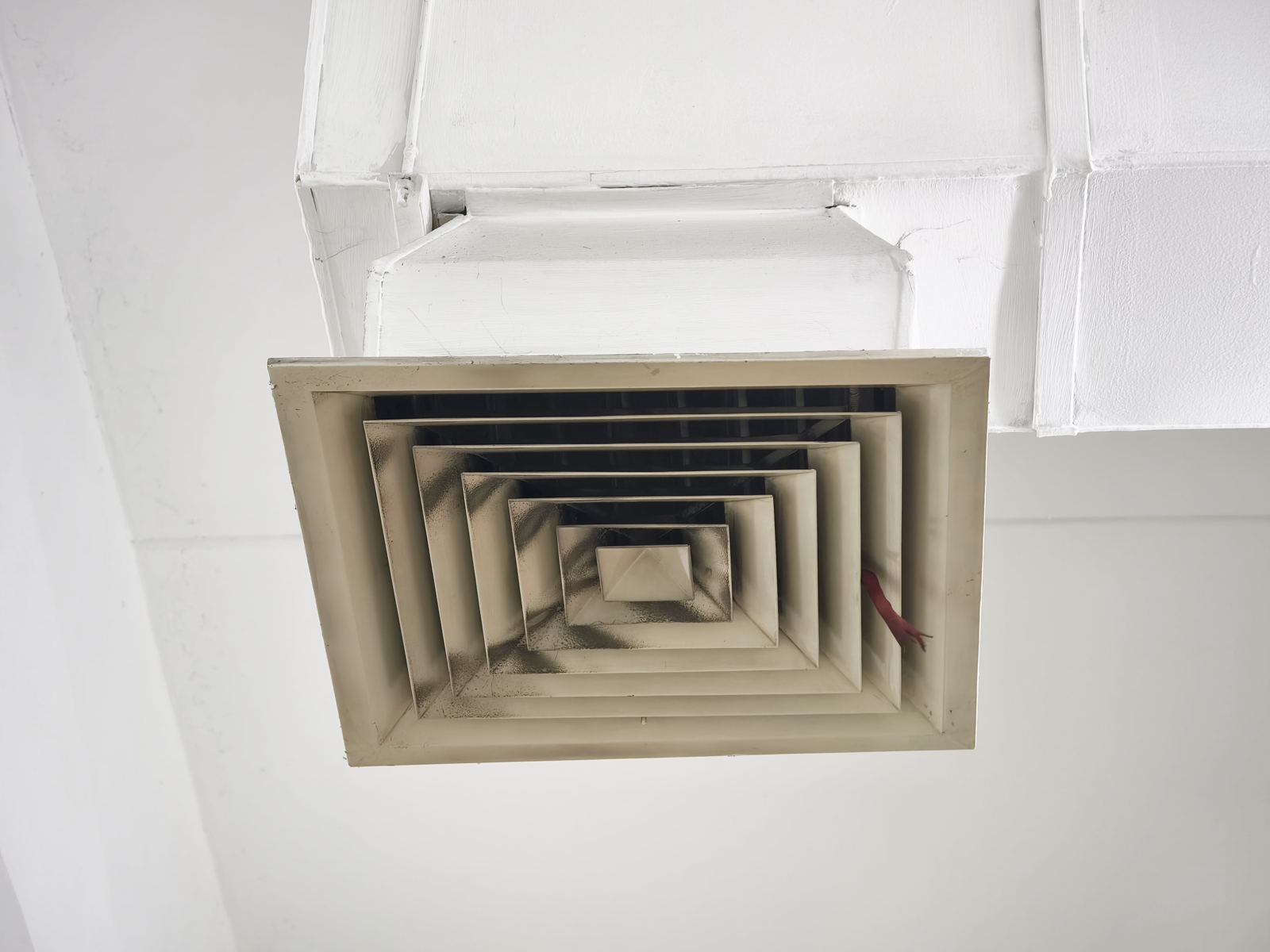
Duct sanitizing and deodorizing are optional add-ons applied after mechanical duct cleaning, never substitutes for it. Only EPA-registered products applied exactly per label belong in ductwork, and no spray cures a moisture problem. DuctDove refers you to a local, independent tech through one toll-free call; we perform no service ourselves and say so plainly.
📞 Call (866) 370-5390Find your cityHere is the shape of the classic sanitizing upsell. You book a modest duct cleaning. Mid-visit, the tech swabs a register, produces an instant mold result, and the tone shifts — now the conversation is remediation, fogging the whole system, and a figure several times the original job, decided today. Every element serves the close: the test is not laboratory analysis, the tester profits from the finding, and the urgency exists to prevent exactly the step that protects you — independent verification. Your counters: ask for the product name and EPA registration number, ask to see the label's HVAC section, and state that any mold finding goes to an accredited lab through someone who is not selling the cure. Honest techs take that in stride. The others get quieter.
Cleaning is mechanical: brushes, agitation tools, and negative-pressure vacuums physically remove dust and debris from duct surfaces. Sanitizing is chemical: an antimicrobial product is applied to those surfaces afterward. The order matters and is not negotiable — product labels require application to cleaned surfaces, because a sanitizer sprayed over a layer of dust treats the dust, not the duct. That makes sanitizing an add-on by definition, never a standalone service and never a shortcut past the vacuum work. It also has a narrower purpose than the sales pitch usually implies: it addresses microbial growth on surfaces at the time of application. It is not a coating, not a long-term shield, and not a substitute for fixing whatever moisture let growth start. Treat it as a finishing step with limits, and it can be a reasonable one.
Only products registered with the EPA for use in HVAC systems, applied exactly as the label directs. In pesticide law the label is binding — it specifies where a product may be used, at what concentration, by what method, and with what ventilation afterward. A product registered for bathroom surfaces does not become duct-safe because a tech owns a sprayer. So the questions to ask are concrete: What is the product name? What is its EPA registration number? Does the label list use inside HVAC ducts, and does it permit the application method being proposed? A professional using a legitimate product answers all four without friction and will show you the label. Hesitation on any of them is your answer. DuctDove refers techs; the product verification above is a check any homeowner can run in two minutes.
No, and this is the most important limit to understand. Microbial growth in ductwork is a moisture symptom — condensation, a humid crawl space, a leak near the air handler. A sanitizer can treat surface growth on cleaned sheet metal, but it does nothing about the water source, so growth returns as long as the moisture does. NADCA's guidance is aligned with this: find and correct the moisture problem first. There is also a materials boundary. Porous duct liner and fiberboard that have supported growth generally cannot be reliably treated and are candidates for replacement, not spraying. Anyone who proposes a chemical fog as the complete answer to mold is selling around both of those facts. The honest sequence is moisture fix, mechanical cleaning, replacement of compromised porous materials, and only then, optionally, an EPA-registered product per label.
Yes — this is one of the classic upsells in the duct industry, and it is worth describing plainly so you recognize it. A tech swabs a register, produces an instant result or a petri dish, announces mold, and pivots to a sanitizing package priced far above the cleaning you booked. The problems: instant swab kits are not laboratory analysis, some surface growth on a register is unremarkable and wipes off, and the person running the test profits from a positive result. Legitimate assessment separates those interests — an independent professional collects samples, an accredited laboratory analyzes them, and the party testing is not the party selling remediation. You are entitled to say: I will get independent testing before authorizing anything. A tech who accepts that calmly is fine. One who escalates the urgency has told you what the test was for.
Three situations come up again and again, and in each the honest answer is yes, with a condition. Smoke — from a kitchen fire, a nearby wildfire, or years of indoor smoking — leaves residue on duct surfaces that keeps releasing odor into the airstream; cleaning plus deodorizing addresses it. Rodents — an infestation or a carcass in a duct run — leave contamination that mechanical cleaning removes and deodorizing finishes, after the pest issue itself is resolved. Renovation — new finishes, adhesives, and dust can hold odors in the system after work wraps. The condition in every case is the same: the source must be gone first. Deodorizer over an active source is a scented delay. A tech who asks source questions before quoting deodorizing is thinking about it correctly.
Decline it when it is offered reflexively with a routine cleaning and you have no odor and no verified microbial issue — a clean duct does not need chemical treatment on principle. Decline it when the justification is an on-the-spot mold test, for the reasons covered above. Decline it when the tech cannot or will not name the product and its EPA registration number, or when the proposed method is not on the label. Decline it as a mold cure when no one has addressed moisture. And decline it when it is priced or pitched as the main event rather than a modest finishing step. None of this requires confrontation; a simple no thank you on the add-on, yes to the cleaning works. The techs DuctDove refers are independent businesses — this page exists so you can evaluate any pitch on its merits.
Only when the specific product's label permits fogging in HVAC systems — and many labels do not. Fogging means aerosolizing a product so it drifts through the ductwork, and the EPA registration process evaluates each application method separately: a product approved for wipe or spray application to accessible surfaces is not thereby approved for aerosolization through a system that distributes air to your living space. Using a product contrary to its label is a violation of federal pesticide law, not a judgment call. So the question to ask is precise: does this label authorize fog application inside air ducts? Ask to see that section. There are products with such labeling, applied by techs who follow the ventilation and re-entry instructions that come with it. The method is not inherently illegitimate — unlabeled use of it is.
No. This one is close to absolute, and the reason lives on the product label: antimicrobials are registered for application to pre-cleaned surfaces. Dust and debris inactivate or absorb the product, so spraying an uncleaned duct accomplishes little beyond the invoice. NADCA takes the same position — chemical treatment, where used at all, follows mechanical cleaning. If someone offers a sanitizing-only visit, quick fogging with no vacuum truck, no agitation, no source removal, you are being offered the appearance of a service. This matters for referrals too: when you call DuctDove about an odor or a suspected growth issue, we route you toward techs who lead with assessment and cleaning, because that is the defensible sequence. Sanitizer is the last step of a real job or it is the whole of a fake one.
The EPA's guidance on duct cleaning is notably measured, and its points about chemicals are worth quoting in spirit. It says chemical biocides and treatments should be applied, if at all, only after mechanical cleaning, using products registered for the intended use, and it advises homeowners to fully understand what is proposed before agreeing. It flags chemical sealants and encapsulants — coatings sprayed inside ducts — as practices with little supporting research, reserved for unusual circumstances at most. And it is candid about the bigger picture: The EPA notes duct cleaning has never been shown to prevent health problems. That sentence sets the honest ceiling for this entire service category. Sanitizing can address surface growth and odors on cleaned metal; it earns no larger promise than that, from us or from anyone standing in your hallway.
Five, in order. First: what is the exact product name and EPA registration number? Both are verifiable on the EPA's public registry. Second: does the label list use inside HVAC ductwork, and may I see that section? Third: does the label permit your application method — spray, wipe, or fog — in ducts specifically? Fourth: what is the surface prep, and has mechanical cleaning happened first? Fifth: what does the label say about ventilation and when we can run the system afterward? A legitimate tech has crisp answers because the label already contains them. Write the registration number down; that alone changes the conversation. And a sixth, quieter question for yourself: what problem am I actually solving? If you cannot name an odor source or a verified growth issue, the honest answer to the add-on may simply be no.
Only if the source is gone. That is the entire physics of it. Odors in ductwork come from residue on surfaces — smoke film, rodent contamination, off-gassing from new materials — or from an ongoing source the system keeps pulling air across, like a damp crawl space or an unresolved pest problem. Cleaning removes residue; deodorizing neutralizes what remains on treated surfaces. Neither can outlast an active source, which is why a musty smell that returns every humid week is a moisture finding, not a product failure. A tech doing this honestly will trace the smell before treating it: where is it strongest, does it track with system runtime, does it follow weather? If the pitch skips straight from your smell to their spray, ask what they believe the source is. The quality of that answer predicts the durability of the result.
The same way we handle everything: one toll-free call, one honest match, no work performed by us. Tell us what you are dealing with — a smoke odor, evidence of rodents, a post-renovation smell, or a suspected growth issue — and we will refer a local, independent tech suited to it. We are candid about this category in particular because it is where the industry's worst upsells live. So, plainly: DuctDove earns nothing from add-ons, we have no sanitizing package to promote, and the guidance on this page — EPA-registered products only, label is law, cleaning before chemicals, independent testing before remediation — applies fully to the techs we refer. Bring these questions to the visit. A good tech will respect you more for asking them, and the ones who bristle have identified themselves.
Call our toll-free line and describe the issue — a smoke odor, rodent evidence, renovation smells, or a growth concern in the ductwork.
We match you with a local, independent duct tech; DuctDove is a referral service and performs no cleaning or treatment itself.
The tech assesses on site — source, surfaces, moisture — and quotes the cleaning first, with any sanitizing or deodorizing itemized as an add-on.
The work is done in the right order: mechanical cleaning, source resolution confirmed, then any EPA-registered product applied strictly per label.
Rarely as a routine matter. It earns its place after specific events — verified microbial growth on cleaned metal surfaces, rodent contamination, smoke residue — and always after mechanical cleaning and source correction. As a default add-on to an ordinary cleaning with no odor and no findings, it is safe to decline.
It means the product has been reviewed by the EPA for specific uses, sites, and application methods, all spelled out on a legally binding label. Registration is searchable by number on the EPA's public registry. It does not mean the product is right for your ducts — that depends on whether the label lists HVAC use.
Call our toll-free line and tell us it is smoke — post-fire, wildfire, or long-term indoor smoking — because that detail matters for the referral. DuctDove will match you with a local, independent tech experienced with residue removal plus deodorizing. We perform no service ourselves; the match is what we do.
Slow down. Instant swabs and petri dishes are not laboratory analysis, and the person selling remediation should never be the person testing for it. Say you will arrange independent, lab-analyzed testing before authorizing treatment. A legitimate finding survives that step; an upsell usually evaporates during it.
Not by itself. A recurring musty smell, especially one that tracks humid weather, points to an active moisture source — condensation, a leak, a damp crawl space feeding the return side. Fix the moisture, clean the surfaces, replace compromised porous liner, and then a per-label treatment can be a reasonable finishing step.
It is lawful only with a product whose EPA label authorizes fog application inside HVAC systems, followed exactly. Many product labels permit spray or wipe application but not aerosolization through ductwork, and off-label use violates federal pesticide law. Ask to see the label section covering the method before agreeing.
Often, yes — this is one of the genuine use cases. The order is fixed: resolve the infestation, remove nesting material and contamination mechanically, then apply an EPA-registered product per label to the cleaned surfaces. Deodorizing at the end is reasonable too. Treatment before removal just perfumes the problem.
Both exist, which is why the screening questions matter more than the zip code. Call DuctDove toll-free and we will refer a local, independent tech; then apply this page — product name, EPA registration number, label method, cleaning first. Techs who welcome those questions are the honest ones, everywhere.
A sanitizer is an antimicrobial — it acts on growth on surfaces and is regulated by the EPA with a binding label. A deodorizer targets odor molecules and residue. Some products do both; many do one. The label states what a product actually claims, which is why asking to read it settles most confusion.
No credible evidence supports that, and labels do not claim it. Sanitizing acts on surfaces at application time; it is not a coating and confers no lasting shield against ordinary dust, which is what re-accumulates in ducts. Anyone selling it as extended protection is claiming something the product's own registration does not.
Scoped inspection, written quote, no scare-sell.
📞 (866) 370-5390🌀 Air Duct Cleaning🔥 Dryer Vent Cleaning❄️ HVAC Coil Cleaning🌬️ Furnace & Blower Cleaning🧰 Duct Sealing🔧 Duct Repair & Replacement🧱 Duct Insulation🔍 Air Duct Inspection🏗️ Post-Construction Cleanup🏢 Commercial Duct Cleaning🧾 Duct Cleaning Cost Factors
 DuctDove