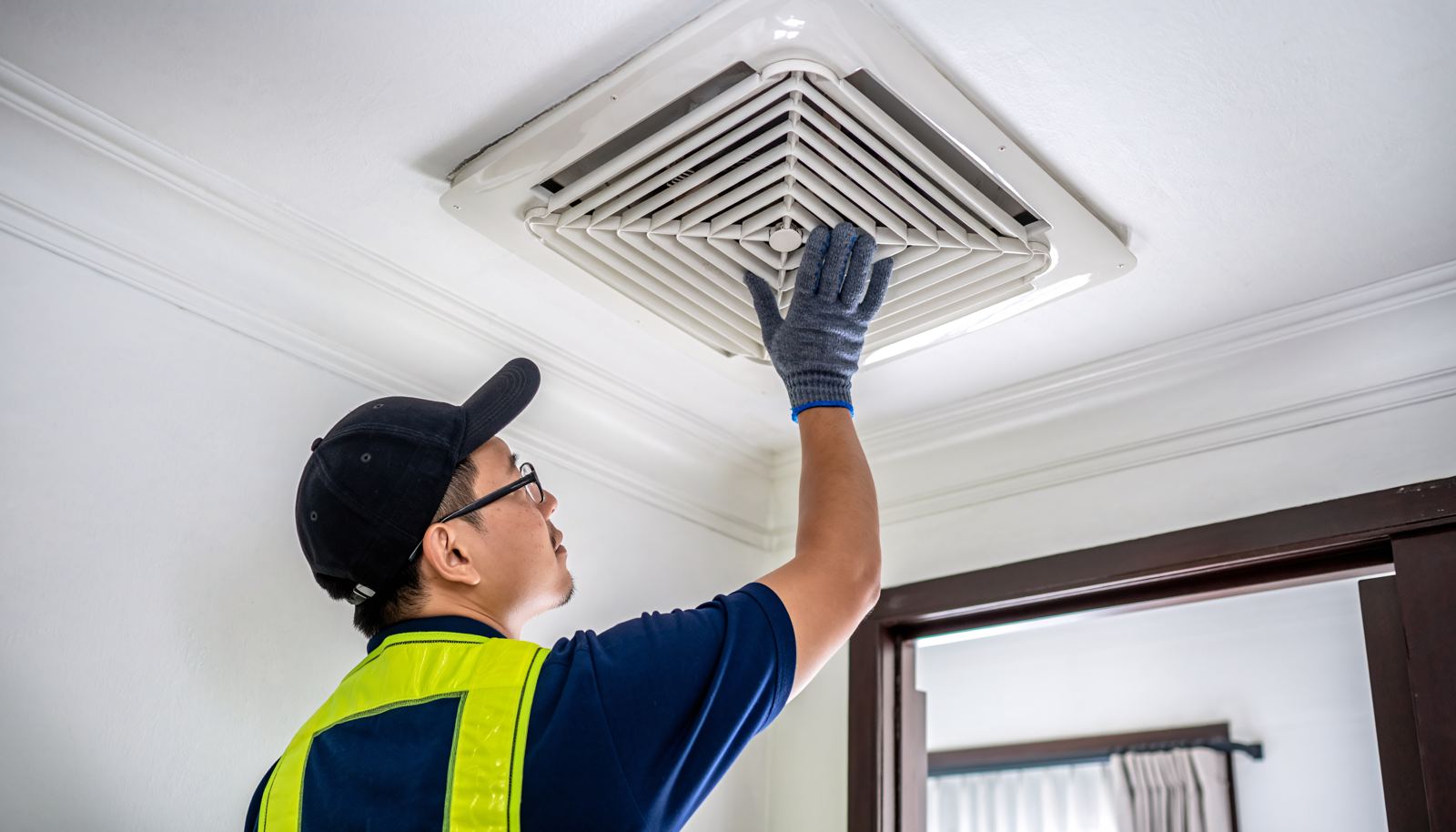
Air duct inspection is a camera or borescope examination of a home's supply and return ductwork, checking for the conditions the EPA says actually justify cleaning: visible mold, vermin, or ducts clogged with debris. It puts evidence before invoices. DuctDove is a referral service — one toll-free call connects you to a local independent technician; we inspect nothing ourselves.
📞 Call (866) 370-5390Find your cityAn inspection can be the honest start of a job — or the opening act of a script. The script version: a coupon or free inspection gets a crew in the door, the camera finds something in every house it visits, and a flashlight glance becomes an on-the-spot mold verdict with an urgent remediation price and no lab sample anywhere. Per-vent surprise math follows, turning the promised look-see into a line-item avalanche. And the horrifying photos passed around the kitchen table? Sometimes they're from other houses entirely — ask for today's date and your own registers in frame. Your countermeasures: written findings you keep, imagery identifiably from your home, lab work behind any mold claim, and quotes you're free to shop.
An air duct inspection is a visual examination of the ductwork that moves air through your home, done with a camera scope, a borescope, or a mirror and strong light at accessible points. Its job is to answer one question with evidence: is there anything in these ducts that justifies cleaning? The EPA's list of justifications is short — visible mold, vermin infestation, or ducts clogged with debris — and an inspection checks your system against exactly that list. It is the honest first step, because it can end with 'your ducts are fine,' and sometimes it should. NADCA's ACR Standard treats assessment as the required starting point of any cleaning project, not an optional extra. DuctDove connects you by phone with a local independent technician who performs the inspection; we perform no service ourselves.
A camera duct inspection typically covers representative supply runs, at least one return, the main trunk where accessible, and a look at the plenum, filter area, and — when in scope — the blower compartment and coil face. The technician removes registers, feeds a scope or camera into the runs, and records what's there: dust depth, construction debris, rodent evidence, moisture staining, or growth that looks mold-like. You should see the footage or photos yourself, live or immediately after, with your own home identifiable. A written summary should map findings to locations — which run, which floor — so any later cleaning quote can be checked against it. An inspection that produces no imagery and no written finding is a sales visit wearing a clipboard. Ask for both up front; honest techs expect the question.
The tool is simple: a small camera on a flexible cable or rigid pole, with its own light, fed through a register opening or an access hole into the duct run. The technician pushes it along the run while watching a screen, capturing stills or video of the duct interior — flex duct, sheet metal, or duct board each show wear and debris differently. Depth of dust, standing debris, crushed sections, disconnected joints, and moisture marks all show up plainly on camera. For the trunk line, a tech may use a larger robot crawler or inspect at existing access panels. The whole point is that you see what they see. When the evidence lives on a screen in front of you, the conversation about whether cleaning is warranted gets much shorter and much more honest.
An inspection earns its keep when something specific prompts it. The EPA's cleaning triggers are the guide: suspicion of mold, such as visible growth near vents or a persistent musty odor; signs of vermin, like droppings, scratching, or insect activity around registers; dust and debris visibly puffing from supplies; or a home fresh out of renovation, where drywall dust and sawdust often land in open ducts. Buying an older home is another sensible moment, since you inherit the ducts sight unseen. What doesn't justify an inspection is a cold call or a scare pitch — urgency invented on your doorstep is a sales tactic, not evidence. If one of the genuine prompts fits your situation, one toll-free call to DuctDove gets a local independent technician out to look, and the findings decide what happens next.
The EPA is openly skeptical of routine duct cleaning, and an inspection is how you honor that skepticism instead of arguing with it. The EPA notes duct cleaning has never been shown to prevent health problems. It recommends cleaning only in specific circumstances: visible mold, vermin infestation, or ducts clogged with excessive debris. Every item on that list is checkable by looking, which is precisely what an inspection does. Rather than buying a cleaning on faith or refusing one on principle, you scope the ducts and let the footage answer. If the triggers are present, cleaning is a reasonable next step. If they aren't, you decline with confidence. DuctDove built its referral model around that sequence: evidence first, then — only if warranted — the work.
Inside the ducts, the technician is checking a short, concrete list. Debris load: how deep is the dust, and is there construction material — drywall crumbs, sawdust, insulation — sitting in the runs? Vermin evidence: droppings, nesting material, chewed flex duct, insect casings. Moisture and growth: water staining, damp liner insulation, and any growth that looks mold-like on duct surfaces or the coil. Mechanical condition gets noted too: crushed flex runs, disconnected joints, and leaky seams that waste conditioned air. Each finding maps to a different response — clogged runs point to source-removal cleaning, suspected growth points to lab sampling before anyone quotes remediation, and mechanical damage points to repair rather than cleaning at all. A good inspection report separates these clearly instead of bundling everything into one urgent total.
No — and this is one of the clearest honesty tests in the industry. A technician can observe growth that looks mold-like and can photograph it, but confirming that a substance is mold requires laboratory analysis of a sample. The EPA is explicit that many substances resemble mold to the eye. So when someone peers into a duct and delivers an instant mold verdict with an urgent remediation price attached, you have learned about their sales process, not your ductwork. The correct sequence: document the growth on camera, take a surface or air sample, send it to a lab, and decide based on results. Any independent technician referred through DuctDove should describe that sequence unprompted. If a mold claim ever arrives without a lab report behind it, the appropriate response is a polite pause.
A residential air duct inspection usually runs thirty minutes to about an hour for a single-system home: registers off, scope through representative supply runs and a return, a look at the plenum and filter area, photos captured, findings walked through. Larger homes, multiple systems, or hard-to-reach trunk lines add time. Beware the two extremes. A five-minute glance ending in a confident whole-house diagnosis was not an inspection. And an inspection that mysteriously stretches into hours of alarming discoveries, each with its own price, has drifted into sales. The deliverable is fixed regardless of duration: imagery from your own ducts, a written summary of what was found and where, and a clear statement of whether the EPA's cleaning triggers are present. Judge the visit by whether you receive those three things.
NADCA's ACR Standard — the industry's benchmark for assessing, cleaning, and restoring HVAC systems — puts assessment first by design. Under the standard, a system is evaluated before cleaning is proposed: what the components are, what condition they're in, and whether cleaning is warranted at all. The standard also defines what clean means afterward, through visual and surface-verification methods, so the same inspection skills bookend the job — scope before, verify after. This matters for homeowners because it flips the sales dynamic: work performed to the ACR Standard begins with looking, not quoting. When DuctDove refers you to a local independent technician, asking whether they assess to the ACR Standard before quoting is a fair, revealing question. The answer should involve cameras and checklists, not a flat price recited from memory.
A useful duct inspection report has four parts. First, imagery: photos or video from inside your ducts, identifiably yours, ideally with locations labeled. Second, findings by location: which runs carry heavy debris, where moisture or growth appeared, what mechanical damage exists. Third, a conclusion mapped to the EPA's trigger list — are any of the conditions that actually justify cleaning present, yes or no? Fourth, recommendations with reasoning, separated by urgency: what needs action, what merits monitoring, what's fine. If cleaning is recommended, the report should support an itemized quote you can cross-check run by run. What a report should never contain: an on-the-spot mold confirmation without lab work, or stock photos. Keep the report either way — it's your baseline for verifying any future work in your home.
Owners can book directly, and an inspection is a low-commitment way to settle a nagging question about an older system or a recently purchased house. Renters benefit differently: an inspection produces exactly the kind of documented evidence landlords respond to. Instead of writing 'the vents seem dusty,' you forward a technician's report with photos from inside the ductwork and a finding mapped to the EPA's trigger list. Check your lease first — HVAC access and maintenance are usually the landlord's domain, so the clean path is requesting the inspection through the property manager, or getting written permission to arrange it. When you call DuctDove's toll-free line, say whether you rent or own; the local independent technician we refer can shape the report for whoever holds the authority to act on it.
The inspection scam is the cleaning scam with an earlier start. Watch for the free-inspection cold call — inspections marketed door-to-door or by phone exist to manufacture findings. Watch for the instant mold verdict, delivered without a lab sample, priced for remediation on the spot. Watch for shock imagery that can't be placed in your home: ask for your address, today's date, or a recognizable register in frame. Watch for the inspection that refuses to end in writing — no report means no accountability. And watch for the bundled close, where the only way to get the findings is to authorize cleaning today at a special price. An honest inspection is quiet: scope, photos, written findings, and a recommendation you're free to take elsewhere. DuctDove refers technicians on the understanding that the report stands alone.
DuctDove is a referral service — we say it plainly and often: we perform no inspections and no cleaning ourselves. When you call the toll-free line, describe what prompted the concern: an odor near a vent, debris at a register, a recent renovation, a house you just bought. We match you with a local, independent technician who inspects ductwork in your area. On site, that tech scopes your actual system and gives you findings and — only if warranted — a written quote for any recommended work. Nothing proceeds without your approval, and the inspection report is yours to keep regardless. You never pay DuctDove; the technician is an independent business, not our employee. The point of the whole arrangement is simple: you get evidence from your own ducts before anyone asks you to spend.
Call the toll-free number and describe what raised the question — odor, debris, renovation, or doubt.
DuctDove matches you with a local, independent technician; we never do the work ourselves.
The tech scopes your ducts on camera, shares the footage, and quotes any warranted work in writing.
If cleaning is justified by the evidence, it's done to the agreed scope with proof at the end.
Look for the deliverables: imagery from inside your own ducts, a written report mapping findings to locations, and a conclusion tied to the EPA's trigger list. DuctDove's toll-free call refers you to a local independent technician who works to that pattern. We perform no inspections ourselves — we connect, they inspect.
Usually. Free inspections marketed by cold call or door knock exist to manufacture findings — the visit is a sales funnel, and the camera mysteriously discovers urgency in every home. An honest inspection has a real cost because it takes real time. Pay for the look, keep the report, and stay free to shop the findings.
That's the model: one toll-free call, a short description of what you're seeing, and a match with a local, independent technician who scopes ducts in your area. Scheduling depends on the tech's calendar, but the referral itself is immediate. DuctDove performs no service — we make the connection and get out of the way.
Because many are priced to require it — a free or too-cheap inspection only pays off if it converts into cleaning or remediation. The fix is structural: use an inspection that stands alone, with written findings you keep and no obligation to buy work from the inspector. Findings you can shop are findings you can trust more.
An air duct inspection is a camera or borescope examination of your supply and return ductwork, checking for the specific conditions the EPA says justify cleaning: visible mold, vermin, or debris-clogged runs. It ends with imagery and a written finding — evidence you can act on, hold, or take to another company.
Roughly thirty minutes to an hour for a single-system home: registers off, scope through representative runs, plenum and filter check, photos, and a walkthrough of findings. Multiple systems add time. A five-minute glance ending in a whole-house verdict wasn't an inspection — and an endless one that keeps finding priced emergencies has become a pitch.
A small camera on a flexible cable or pole with its own light, fed through registers or access points; a mirror and strong light at accessible runs; sometimes a robot crawler for long trunk lines. The tool matters less than the output: imagery you can see, from ducts identifiably yours.
It can spot growth that looks mold-like and document it — confirmation requires a lab sample, full stop. The EPA notes many substances resemble mold on sight. Any inspector who declares mold and quotes remediation in the same breath, without lab work, has skipped the step that makes the claim mean anything.
Yes, in effect — NADCA's ACR Standard treats assessment as the starting point of any cleaning project. The inspection establishes whether the EPA's triggers are present and defines the scope a quote should match. Cleaning sold without a look inside first is priced on assumption, and assumptions in this industry rarely favor the homeowner.
The EPA recommends cleaning only in specific circumstances — visible mold, vermin infestation, or ducts clogged with debris. The EPA notes duct cleaning has never been shown to prevent health problems. An inspection checks your system against exactly that list, which is why it's the honest first step rather than an upsell.
Scoped inspection, written quote, no scare-sell.
📞 (866) 370-5390🌀 Air Duct Cleaning🔥 Dryer Vent Cleaning❄️ HVAC Coil Cleaning🌬️ Furnace & Blower Cleaning🧰 Duct Sealing🔧 Duct Repair & Replacement🧱 Duct Insulation🍃 Sanitizing & Deodorizing🏗️ Post-Construction Cleanup🏢 Commercial Duct Cleaning🧾 Duct Cleaning Cost Factors
 DuctDove