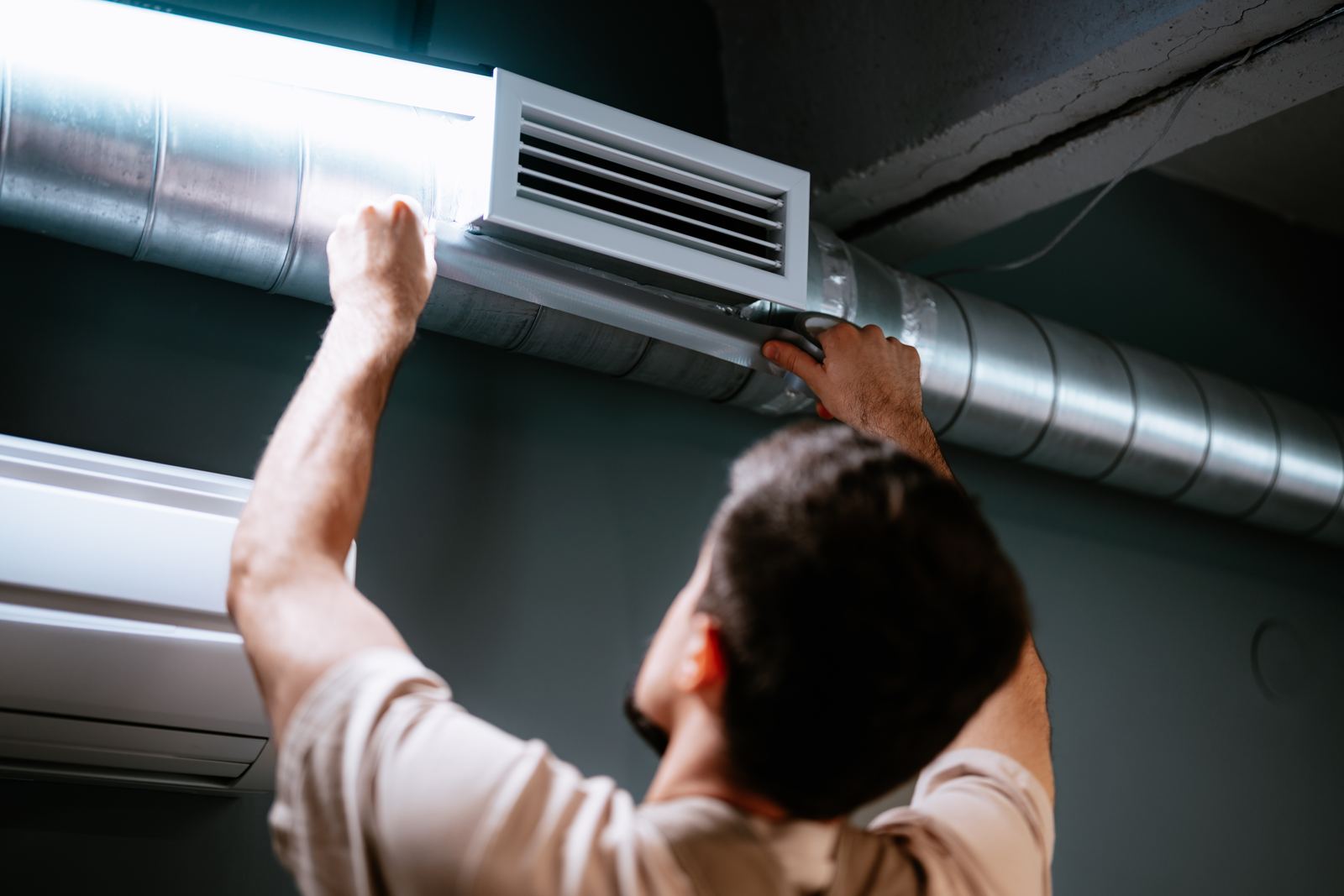
Duct repair and replacement fixes the physical failures sealing cannot: crushed flex runs, disconnected boots, rodent-damaged sections, and sagging supports. A technician repairs what is sound and replaces what is not, sized correctly for your equipment. DuctDove is a referral service; one toll-free call connects you with a local, independent duct tech. We perform no work ourselves.
📞 Call (866) 370-5390Find your cityHow duct repair goes wrong: the most common inflation is turning a two-hour fix into a full-system replacement. A single disconnected boot or one chewed flex run does not condemn a duct system, and a photo of the worst joint is not proof the whole thing failed. Watch for quotes that skip diagnosis, with no crawl, no photos, and no airflow measurements, and for replacement bids that copy the old sizes instead of doing sizing math, which replaces your problems with identical new ones. Watch also for the opposite dodge: endless small patches on duct that is failing everywhere, billed visit after visit. A fair technician shows the damage, separates must-do from nice-to-do, and prices repair and replacement side by side when both are plausible.
Plenty of duct problems are honest repairs rather than replacements. A disconnected boot can be reattached, sealed, and supported. A short section of torn or rodent-damaged flex can be cut out and spliced with a metal coupling, rated tape, and mastic. Sagging runs can be re-hung with proper straps. Crushed spots can sometimes be reshaped in sheet metal, though crushed flex usually needs the section replaced. Loose plenum connections, leaky takeoffs, and failed boot-to-floor seals are all routine fixes. The pattern: localized, mechanical damage in an otherwise sound system is repairable. Widespread deterioration, such as brittle jackets, crumbling duct board facing, or undersized design, pushes toward replacement, and a straight-shooting technician will show you which situation you have before quoting either.
Replacement earns its keep when the problems are systemic rather than local. Flex duct whose outer jacket crumbles at a touch has reached end of life everywhere, not just where you noticed. Duct board with failing facing or widespread moisture damage is not worth patching panel by panel. Systems that were undersized or badly routed on day one, with long serpentine flex runs, starved returns, or trunk lines that choke airflow, cannot be repaired into good design. Extensive rodent damage across many runs often takes more effort to chase section by section than to replace. A useful test: if repairs would touch most of the system anyway, replacement buys you correct sizing, sealed joints, and fresh insulation in one pass. If damage is confined to a few spots, repair wins.
Airflow through that run collapses, sometimes almost entirely. Flex duct is a wire coil with a thin liner; step on it, pinch it in a truss bay, or bend it hard around a corner and the inner liner necks down like a squeezed straw. The room it serves gets weak airflow no thermostat setting can fix, while the blower pushes harder against the restriction. Common causes are storage boxes stacked on attic runs, ducts pinched during other trades' work, and long runs installed with sharp bends instead of gentle sweeps. Repair is usually straightforward: replace the crushed section or re-route the run with proper support and radius. What does not work is turning up the equipment, because a bigger blower fighting a crushed duct just gets louder.
The boot is the fitting that connects a duct run to the register in your floor, wall, or ceiling. When the duct pulls off the boot, whether from a bumped run, failed tape, or missing mechanical fasteners, every bit of air meant for that room dumps into the attic, crawlspace, or wall cavity instead. You will notice a register that blows weakly or not at all, and in a crawlspace you may notice conditioned air heating or cooling the dirt. This is one of the most common finds in older houses and one of the most satisfying repairs: reconnect, fasten with screws or a proper clamp, seal with mastic, and support the run so it cannot pull loose again. Diagnosis takes minutes with eyes on the duct.
Rodents chew flex duct liners, tunnel through exterior insulation jackets, tear duct board, and occasionally take up residence inside runs, leaving nesting material and droppings behind. The airflow damage is the same as any tear: conditioned air escapes, and unfiltered crawlspace air can get pulled in. Repair means replacing chewed sections rather than patching over them, since compromised liner keeps failing, and then closing the entry points into the crawlspace or attic so the same animals do not return to the same buffet. Where droppings or debris are inside the ducts, cleaning by a firm following NADCA standards is a reasonable companion step. Beware anyone selling a full duct replacement for one chewed run, or a cleaning-only fix that leaves the torn duct torn.
Flex duct is only as good as its hanging. When straps are missing, too far apart, or cinched so tight they pinch the duct, runs droop between supports and every sag becomes a shallow trap that adds resistance. Enough sags in series can cut a run's delivered air dramatically, and low spots in cooling ducts can collect condensation in humid climates. The fix is inexpensive and unglamorous: wide straps at proper intervals, runs pulled reasonably taut, and gentle bends instead of hard corners. This is also where honest diagnosis matters. A room getting weak airflow from a saggy, serpentine run needs re-supporting, not a louder blower and not a duct cleaning. Ask the tech to photograph the runs before and after; good ones do it unprompted.
None is best everywhere; each trades differently. Sheet metal is the durability king, with a smooth interior, decades of service life, and joints that seal well with mastic, but it takes more labor to fabricate and install and needs insulation added in unconditioned spaces. Flex duct is inexpensive, quick, pre-insulated, and quiet, and it performs well in short, straight, well-supported runs; its weakness is everything installers do to it, meaning kinks, sags, and excessive length. Duct board is insulated, quiet, and simple to fabricate, but its interior surface is less smooth and its facing and edges age worse than metal. Many good systems mix them; metal trunks with short flex branches is a common, sensible pattern. Be wary of anyone who declares one material always right. That is a preference, not physics.
Because the blower can only move air the duct system lets through. Return ducts are the intake side; when they are too small, the blower starves no matter how powerful it is, like a strong person trying to drink a thick shake through a coffee stirrer. Forcing more fan speed into undersized returns raises noise, strains the motor, and can push equipment outside its designed airflow range without delivering much more air to rooms. The correct fix is more return path, meaning larger or additional return ducts and grilles, sized from the equipment's airflow requirement rather than guessed. If a contractor proposes bigger equipment for a comfort problem without measuring static pressure or examining return sizing, the diagnosis is incomplete. Ducts and equipment are a matched pair, and the ducts usually limit.
By calculation, not by copying what was there. Proper sizing starts from the airflow each room needs, driven by its heating and cooling load, and works backward to duct diameters, trunk dimensions, and return area, commonly using industry methods like ACCA's Manual D. The old system's sizes are not a safe template, since the old system is often why you are replacing it. Signs of a real sizing effort: the tech measures rooms or reviews a load calculation, counts and sizes returns, and checks the equipment's required airflow and static pressure limits. Signs of guessing: same size as before, one central return for a large house, or long flex branches chosen because the truck had that diameter on board. Sizing is the part of replacement you cannot see later, and the part that matters most.
A register that suddenly blows weakly points to a crushed, sagging, or disconnected run. Air you can feel in the attic or crawlspace near a duct, or ducts visibly hanging, torn, or lying on the ground, are self-explanatory. Whistles and rattles that start after work was done in the attic suggest something got stepped on or pulled loose. Chewed insulation, droppings near runs, or debris blowing from a register point toward animal damage. Rooms that lag suddenly, as opposed to always having lagged, usually mean new physical damage rather than a design flaw. The distinction matters: sudden change suggests repair, while lifelong underperformance suggests sizing or layout problems that repair alone will not solve. A short inspection with photos settles it faster than speculation from the driveway.
Yes, and it should be part of the quote, not an afterthought. Every joint in new duct, from collars and takeoffs to boots and plenum seams, should be sealed with mastic or UL 181 tape as it is assembled, which is far easier than sealing it later. Runs through unconditioned attics or crawlspaces need insulation appropriate to your climate, and ENERGY STAR points to those unconditioned spaces as the priority. A replacement quoted without sealing and insulation line items is either incomplete or assuming you will not ask. The good news: a system built tight and insulated from day one is exactly why replacement sometimes beats years of piecemeal patching. Ask the tech to state the sealing method and insulation R-value in writing.
One toll-free call, plainly disclosed: DuctDove is a referral service, and we do not repair, replace, seal, or clean ducts ourselves. Tell us the symptoms, whether that is a dead register, noises after attic work, or visible damage, and we connect you with a local, independent technician who does duct repair for a living. The tech inspects on site, shows you what they find, and quotes the scope in writing; you decide with no obligation. We may be compensated for the referral, which does not change your price. Our stake in this is simple: we refer to techs who diagnose before they sell, and we want to hear how the visit went either way.
Call the toll-free line and describe the problem, whether that is a weak register, visible damage in the attic, or noises after other work was done.
We refer you to a local, independent duct technician. DuctDove is a referral service and never performs the repair itself.
On site, the tech inspects the damage, distinguishes repair from replacement honestly, and puts scope and price in writing.
The work is done right: reconnections fastened and sealed, replaced runs sized and supported properly, and results shown to you.
Call DuctDove's toll-free line and we will connect you with a local, independent technician who repairs and replaces ductwork near you. We are a referral service; we perform no repairs ourselves, and we say so plainly. The tech inspects on site and quotes in writing with no obligation.
Any competent local duct technician, and one call to DuctDove gets you referred to one. Crushed flex rarely bounces back, so the damaged section is cut out and replaced, spliced with a metal coupling, rated tape, and mastic, then re-supported or re-routed so it cannot be crushed again.
The clearest sign is a register that goes from normal to weak or dead, often after work in the attic or crawlspace. You may also feel conditioned air in the space where the duct runs. A technician confirms it visually in minutes; it is among the most common and most fixable duct problems.
Usually both, in the right order. Chewed or torn sections get replaced, entry points get closed, and if droppings or nesting debris are inside the runs, cleaning performed to NADCA standards is a sensible companion step. Be skeptical of full-system replacement quotes for one damaged run, or cleaning that ignores the tear.
A typical single-family home takes one to three days depending on access, house size, and how much of the system is being replaced. Attic and crawlspace access drives the timeline more than duct footage does. A written quote should state the expected duration along with materials, sizing, sealing, and insulation.
No, but badly installed flex duct is bad. Short, straight, well-supported flex runs with gentle bends perform fine and come pre-insulated. Problems come from excessive length, sharp bends, sagging, and pinch points. Sheet metal is more durable, but plenty of comfortable houses run on properly installed flex. Installation quality outweighs material choice.
Independent HVAC and duct specialty companies handle replacement in most areas. DuctDove exists to shortcut the search: one toll-free call and we refer you to a local, independent technician. We disclose the referral relationship, we perform none of the work ourselves, and the quote you receive carries no obligation.
A walkthrough of accessible runs in the attic, crawlspace, or basement; a look at boots, takeoffs, supports, and plenum connections; photos of anything damaged; and often airflow or static pressure checks at the equipment. The output should be a written scope separating must-fix damage from optional improvements, with reasons for each.
Only if damage is the cause. A room that recently declined often has a crushed or disconnected duct, which is repairable. A room that has never been comfortable usually reflects sizing or layout, and the honest fix is a redesigned run or added return, not a patch. A good tech tells you which you have.
Duct board is rigid fiberglass board with a foil facing, fabricated into trunks and plenums. It insulates well and runs quiet. Sound duct board is worth keeping and sealing; board with crushed corners, failing facing, or moisture damage is worth replacing. Condition, not material, should drive the decision.
Scoped inspection, written quote, no scare-sell.
📞 (866) 370-5390🌀 Air Duct Cleaning🔥 Dryer Vent Cleaning❄️ HVAC Coil Cleaning🌬️ Furnace & Blower Cleaning🧰 Duct Sealing🧱 Duct Insulation🍃 Sanitizing & Deodorizing🔍 Air Duct Inspection🏗️ Post-Construction Cleanup🏢 Commercial Duct Cleaning🧾 Duct Cleaning Cost Factors
 DuctDove