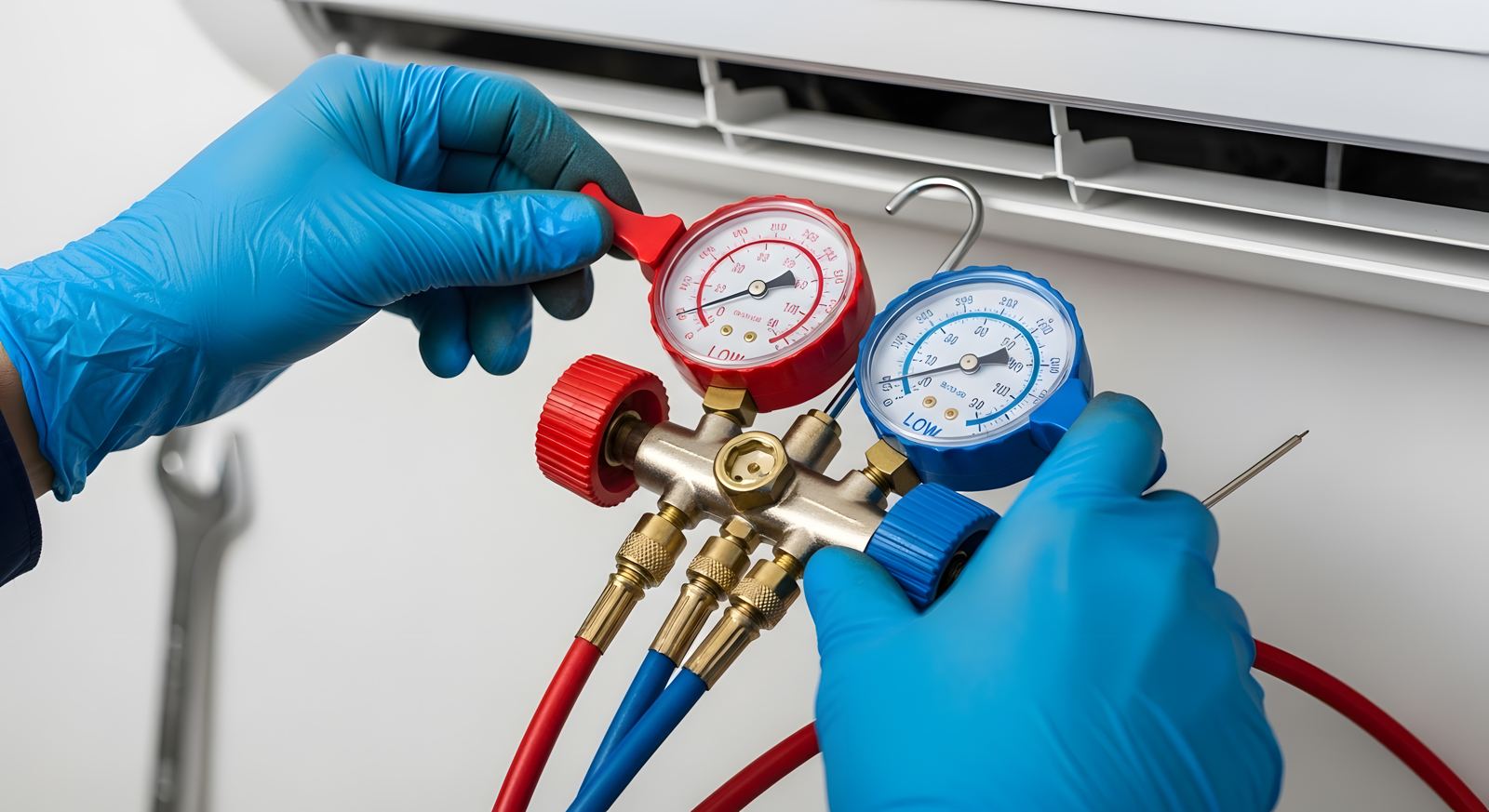
Furnace blower cleaning removes packed dust from the blower wheel and housing — the fan that pushes air through your ducts. A caked wheel moves less air and runs louder. DuctDove is a referral service, not a contractor: one toll-free call connects you with a local, independent tech who inspects, quotes, and does the work.
📞 Call (866) 370-5390Find your cityThe classic bad version starts with a duct cleaning quote that balloons on arrival: the crew opens the blower door, gasps, and adds blower, coil, and a 'sanitizing' treatment to the ticket before anything has been properly inspected. Or the reverse — a furnace tune-up where the tech quotes a full blower pull for a wheel with normal light dusting that a vacuum pass would handle. Watch for stock photos instead of your own equipment, refusal to let you look at the blades yourself, pressure to decide on the spot, and bundles priced only as a package. The fixes: see the wheel before you approve, get separate line items for blower, coil, and ducts, and decline any piece that looks clean. A trustworthy tech will happily show you everything.
The blower is the fan at the heart of a furnace or air handler — a squirrel-cage wheel of curved blades spinning inside a metal housing, pushing every cubic foot of air your ducts deliver. Blower cleaning means removing the buildup from that wheel and housing: a technician cuts power, slides the blower assembly out, washes the packed dust off each blade, cleans the housing, protects the motor from moisture, and reinstalls everything. It's a mechanical job with a mechanical payoff — a clean wheel grips air the way it was designed to, so the system moves more air with the same motor. DuctDove doesn't perform blower cleaning; we connect you by phone with a local, independent tech who does.
Three symptoms come up again and again. First, weak airflow: registers that used to push a strong stream now barely stir the air, in every room at once rather than just one branch. Second, noise: a caked wheel goes out of balance, producing a hum, drone, or vibration through the cabinet and ducts that wasn't there before, sometimes with a rhythmic wobble at startup. Third, dust rings — dark streaks or halos forming around supply registers and returns, a sign the air stream is carrying dust the filter never caught. None of these alone proves the blower is the culprit, which is why a real diagnosis starts with pulling the blower door and looking at the blades rather than quoting from the driveway.
In most systems the filter sits upstream of the blower, so the blower only sees what gets past it. The usual leaks: a filter that doesn't fill its slot, leaving a gap along one edge; a filter rack without a cover, pulling in unfiltered closet or basement air; return ducts with open seams drawing attic or crawlspace dust in after the filter; and long stretches running the fan with a clogged or missing filter, common during construction. Household film compounds it — cooking residue makes the blades slightly tacky, so dust bonds instead of blowing through. Each blade's curved face collects buildup in its cup, exactly where it does the most aerodynamic damage. Fix the bypass paths and the wheel stays clean far longer.
A proper job is removal and wash, not a quick vacuum through the door. The tech kills power at the switch and breaker, opens the blower compartment, disconnects the wiring, and slides the blower assembly out on its rails. The wheel is usually separated from the motor so it can be washed with degreaser and water until each blade cup is bare metal; the motor stays dry and is cleaned by brush and vacuum, with its cooling vents cleared. The housing gets wiped out, the wheel is checked for cracked blades or a loose hub, everything is reassembled and balanced, and the tech runs the system to verify smooth, quiet operation. Expect roughly one to two hours depending on access.
A blower wheel is balanced at the factory like a car tire. Dust doesn't deposit evenly — some blades pack heavier than others — so a caked wheel spins slightly lopsided, and that imbalance turns into vibration you hear as droning, rumbling, or a wobble that changes with fan speed. The vibration also telegraphs through the cabinet and duct connections, which can rattle at their own frequencies. Cleaning restores the balance in most cases, and it's the cheapest of the possible fixes. But louder operation has other causes worth ruling out — worn motor bearings, a failing capacitor letting the motor labor, or a loose panel — so ask the tech to spin the wheel by hand and check the motor before assuming dust is the whole story.
It can, because of where the dust lands. Each blade on a blower wheel is a small curved scoop, and its exact curve is what lets it grab air and throw it into the housing. Buildup fills in that curve, so a packed blade presents a blunter, shallower profile that moves noticeably less air per revolution — the motor spins just as fast and draws just as much power, but delivers less. The effect compounds with a dirty coil downstream or crushed flex duct elsewhere; airflow problems are usually additive. The honest framing is qualitative: cleaning restores the airflow the blades were designed to deliver and helps the system run as designed. No one can promise a specific number without measuring your system before and after.
They share one air path: return ducts feed the blower, the blower pushes air through the coil, and supply ducts carry it onward. When bypass dust has been running through that path for years, all three collect it, and cleaning one while leaving the others dirty means recontamination or leftover restriction. That's the legitimate version of the bundle. The illegitimate version is quoting all three sight unseen. Insist on inspection first: a tech should show you the blower blades, the coil face, and the duct interior before pricing each piece, and you should feel free to approve some and decline others. The EPA notes duct cleaning has never been shown to prevent health problems. The case for any of this work is mechanical — airflow and equipment operation, nothing more.
MERV — Minimum Efficiency Reporting Value — rates how well a filter captures particles, with higher numbers catching smaller material. For most homes, MERV 8 to 11 is a sensible range: real capture without choking airflow. MERV 13 catches more but adds resistance some blowers weren't designed for, so check your equipment manual or ask a tech before going that high. Two things matter more than the number, though. Fit: a MERV 11 filter with a gap around its frame filters worse than a MERV 8 seated tight. And schedule: any filter left in place until it cakes over starts starving airflow and bypassing dust. Buy the size your slot actually takes, seat it snug, and change it before it looks bad.
Over time, yes, in a few mechanical ways. The imbalance from uneven buildup puts a constant flutter of side-load on the motor shaft and bearings, wearing them faster than a balanced wheel would. Dust blanketing the motor body traps heat, and many blower motors also cool themselves through vents that buildup can block — a hotter motor is a shorter-lived motor. On systems with variable-speed motors, the electronics ramp up to compensate for restriction, adding sustained load. None of this fails a motor overnight; it shortens the runway. That's the honest pitch for cleaning a genuinely packed wheel: it's inexpensive protection for a component that costs real money to replace, and a tech can check bearing play while the assembly is out.
Plan on one to two hours for a straightforward job. The tech confirms symptoms, cuts power, and pulls the blower door to verify the wheel is actually dirty — you should be shown the blades before any work is approved. The assembly comes out; the wheel gets washed outside or at a utility sink; the motor is brushed and vacuumed and its vents cleared; the housing and surrounding cabinet are wiped down. While things are apart, expect a quick check of the capacitor, bearing play, and the belt if there is one. Reassembly, a test run through the fan speeds, and a listen for vibration close it out. Tight closets, attic air handlers, or rusted fasteners add time; the tech should flag that in the quote.
It's more involved than the coil, and the hazards are electrical as well as mechanical. The blower circuit includes a capacitor that can hold a charge after power is off, wiring that must be disconnected and correctly re-landed, and on many furnaces a control board inches from the work. The wheel itself is balanced; removing it carelessly or bending a blade turns a noise complaint into a worse one. If you're comfortable with appliance-level electrical work, have the manual, and photograph every connection first, a careful owner can do it. Everyone else should hire it out — this is a modest job for a tech with the right pullers and experience. Vacuuming visible dust through the open door, with power off, is the safe DIY middle ground.
No. DuctDove performs no cleaning, no repairs, and no inspections — we say that plainly because most of the industry doesn't. We're a referral service: one toll-free call, and we connect you with a local, independent technician who handles blower work in your area. The tech quotes the job, you approve or decline, and payment goes straight to the tech. Our interest is simple — we get paid for making good referrals, and referrals only stay good if the techs we send do honest work at fair scope. That means we'd rather a tech tell you your blower is fine than invent a job. If your experience with a referred tech is anything less, we want to hear about it, and we act on it.
Call our toll-free number and describe the symptoms — weak airflow, new noise, dust streaks at the registers.
We match you with a local, independent HVAC tech who handles blower work. DuctDove never does the cleaning itself.
On site, the tech pulls the blower door, shows you the wheel, and quotes the scope in writing before starting.
The work gets done right: wheel washed, motor cleaned dry, everything rebalanced, reinstalled, and test-run.
Local, independent HVAC technicians — and connecting you with one is all DuctDove does. Call our toll-free number, describe the symptoms and your location, and we'll refer a tech who serves your area and handles blower work. We perform no service ourselves; the tech inspects, quotes, and gets paid directly by you.
It's priced by labor and access: an easy-access blower in a garage furnace is a smaller job than one in a crawlspace or attic air handler with rusted fasteners. Any firm number given before the blower door comes off is a guess. Get the quote after an on-site look, in writing, with the scope spelled out.
Plan on one to two hours for a typical job: power off, blower assembly removed, wheel washed clean, motor brushed and vacuumed with vents cleared, housing wiped, everything reassembled and test-run through its speeds. Tight closets, attic units, and corroded hardware stretch that. The tech should flag access problems in the quote, not afterward.
Weak airflow at every register at once, new droning or vibration noise that changes with fan speed, and dust streaks or rings forming around supply registers. Any one alone has other explanations, so the confirmation is visual: the blower door comes off and you're shown packed buildup in the blade cups before work is approved.
Yes — it's one of the most common causes of a furnace getting gradually louder. Dust packs the blades unevenly, throwing the wheel out of balance, and the imbalance becomes a drone or wobble that telegraphs through the cabinet and ducts. Cleaning restores balance in most cases, though worn bearings and failing capacitors should be ruled out too.
Only if inspection shows they're dirty too. The three share one air path, so long-term bypass dust often fouls all of them — that's the legitimate reason bundles exist. The illegitimate version is a three-part quote before anything has been opened. Ask to see each component, get separate line items, and decline whatever's clean.
MERV 8 to 11 suits most homes — meaningful capture without airflow strain. MERV 13 filters more but adds resistance some blowers weren't built for, so check your manual or ask a tech first. Fit and schedule beat the number: a well-seated filter changed on time protects the blower better than a high rating with a gap around it.
With power off at the switch and breaker, vacuuming what you can reach through the open blower door is a reasonable owner task. Full cleaning — pulling the assembly, washing the wheel, keeping the motor dry — involves a capacitor that can hold a charge, wiring, and a balanced wheel that's easy to damage. Most owners should hire that part out.
If the noise comes from a caked, out-of-balance wheel, yes — cleaning restores factory balance and the drone usually goes with it. If the real cause is worn motor bearings, a loose panel, or a failing capacitor, cleaning won't fix it. A good tech spins the wheel by hand and checks the motor before promising anything.
That's the referral DuctDove tries to make. The techs we send are local and independent, and they keep receiving referrals only if customers report honest scoping — we drop those who pad jobs. Your own defense is simple: ask to see the blower blades before approving work. A tech who won't show you isn't the one.
Scoped inspection, written quote, no scare-sell.
📞 (866) 370-5390🌀 Air Duct Cleaning🔥 Dryer Vent Cleaning❄️ HVAC Coil Cleaning🧰 Duct Sealing🔧 Duct Repair & Replacement🧱 Duct Insulation🍃 Sanitizing & Deodorizing🔍 Air Duct Inspection🏗️ Post-Construction Cleanup🏢 Commercial Duct Cleaning🧾 Duct Cleaning Cost Factors
 DuctDove