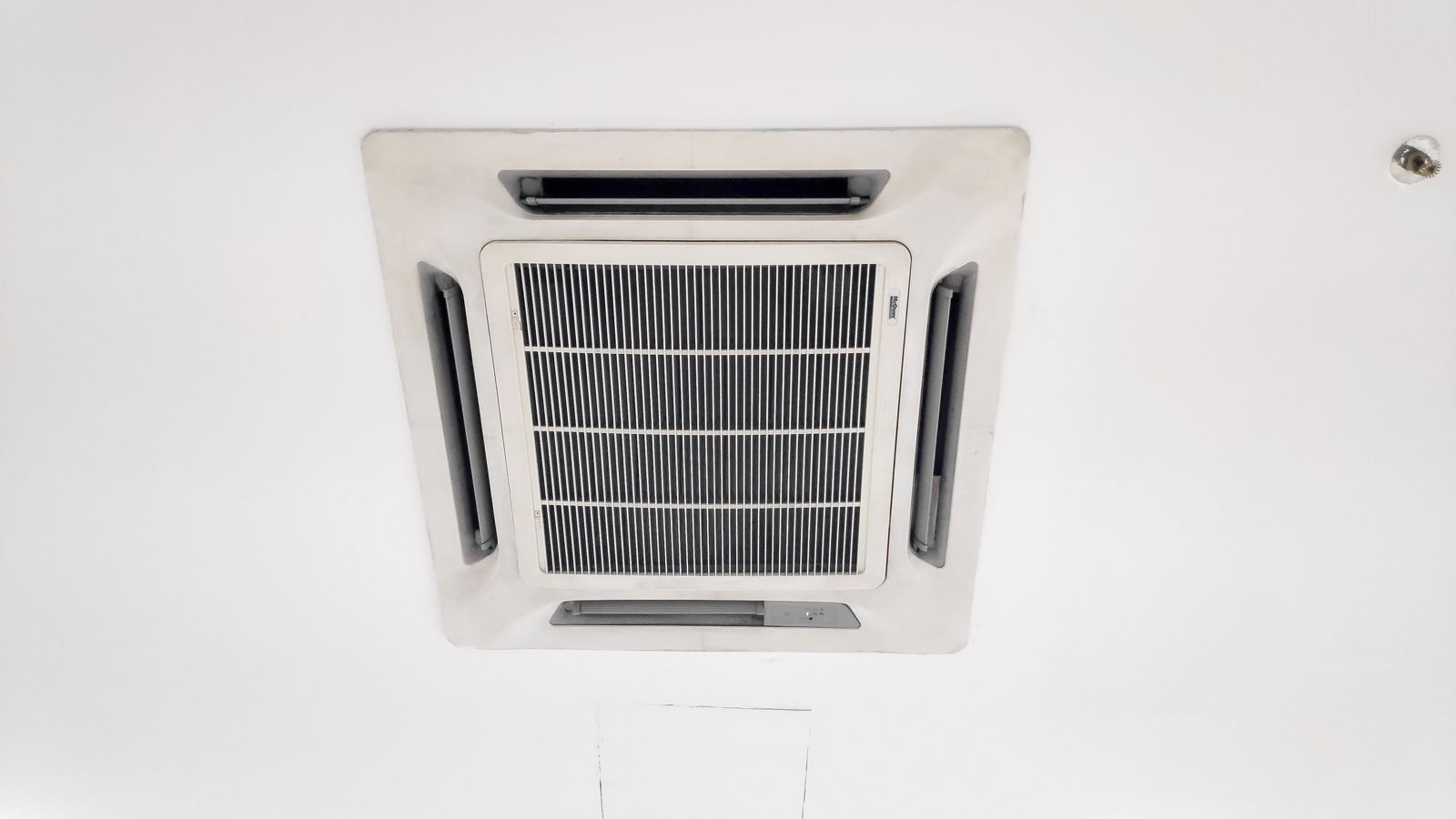
Evaporator coil cleaning removes the dust film that collects on the indoor coil of a central air conditioner or heat pump, restoring airflow and helping the system run as designed. DuctDove doesn't perform the work — we're a referral service that connects you with a local, independent HVAC tech through one toll-free call.
📞 Call (866) 370-5390Find your cityHere's how coil cleaning goes wrong. A tech arrives for a bargain tune-up, shines a flashlight into the plenum for ten seconds, and announces the coil is 'destroyed' — sometimes showing a photo that isn't from your system. The quote jumps straight to a pull-and-clean when the fouling, if any, is light surface dust that an in-place cleaning or a simple filter fix would handle. Add-ons pile on sight unseen: coatings, fogging treatments, ultraviolet gadgets, an annual coil contract. Your defenses are simple. Ask to see your own coil, in place, before approving anything. Get the method — in-place or pull-and-clean — and the price in writing. And remember the honest baseline: a well-fitted filter changed on schedule prevents most coil fouling in the first place.
The evaporator coil is the indoor half of a central air conditioner or heat pump — a folded panel of refrigerant tubing and thin aluminum fins that sits in or above the air handler. Every bit of air your system moves passes through those fins, and because the coil runs cold and wet in cooling season, it acts like flypaper for any dust that slips past the filter. Coil cleaning removes that buildup. A technician opens the coil compartment, assesses how deep the fouling goes, and either cleans the coil in place with coil-safe cleaners and low-pressure rinsing, or pulls it from the plenum for a full wash. DuctDove doesn't do this work ourselves; we refer you to a local, independent tech who does.
Almost all coil fouling comes down to bypass dust — air that reaches the coil without passing through filter media. The common culprits: a filter slightly too small for its slot, a bent frame that leaves a gap at one edge, a filter rack with no cover door, return-duct leaks that pull in attic or crawlspace dust downstream of the filter, and stretches where the system ran with no filter at all, often during renovation. Because the coil is damp when the AC runs, whatever dust arrives tends to stick and mat rather than blow through. A modest filter that's clean and well-seated usually beats a premium filter with a gap around it. Fix the bypass path, and the coil stays clean far longer.
A fouled coil hurts the system two ways at once. First, the mat of dust physically narrows the passages between fins, so the blower moves less air through the house — rooms feel weakly supplied even though the equipment is running. Second, the dust layer acts as insulation between the air and the cold refrigerant inside the tubing, so the coil absorbs less heat with every pass. The system compensates with longer run times to reach the same thermostat setting. Cleaning doesn't make a system better than new — it restores airflow and helps the equipment run as designed. Any contractor quoting an exact percentage of energy savings is guessing; the honest claim is simply that a clean coil transfers heat the way the manufacturer intended.
Yes — it's one of the classic causes. When airflow across the coil drops far enough, the refrigerant inside stops absorbing enough heat, the coil surface falls below freezing, and moisture in the air freezes onto the fins instead of dripping into the pan. Ice restricts airflow further, so the problem snowballs until the coil is a solid block and the vents blow almost nothing. A dirty coil, a clogged filter, a failing blower, and low refrigerant charge can all produce the same ice, so a competent tech should check charge and airflow before declaring cleaning the fix. If your system freezes, turn cooling off, let the ice melt with the fan running, and get it inspected rather than repeatedly thawing and re-running it.
In cooling season the coil constantly condenses water out of the air — that's normal, and it drains away through a pan and condensate line. A dirty coil disturbs this. Dust washing off the fins ends up in the pan, where it forms sludge that clogs the drain line. When the line blocks, water backs up and either trips a float switch that shuts the system down or overflows into the furnace cabinet, the ceiling, or the closet floor. If you're seeing water around the air handler, or repeated shut-offs on hot days, the coil and drain usually need attention together. A proper coil cleaning includes flushing the pan and drain line, not just wiping the fins — ask for that in the scope.
In-place cleaning means the tech works on the coil where it sits: panels come off, a coil-safe cleaner is applied, and the fins are rinsed at low pressure with the condensate system carrying the residue away. It suits light-to-moderate fouling on coils with decent access, takes an hour or two, and involves less labor. Pull-and-clean means disconnecting and removing the coil so both faces can be washed thoroughly — the only real option when the mat has penetrated deep into the fins or the coil's back face is unreachable. It takes much longer and may involve recovering refrigerant, so it should be reserved for genuinely packed coils. A good tech shows you the fouling depth and explains which method fits before quoting.
The pairing has real logic when the whole air path is dirty: if the ducts show heavy debris, the return side has been feeding dust to the coil, and cleaning the ducts while leaving a matted coil — or the reverse — leaves the job half done. Many duct crews also protect or clean the coil because agitation upstream can loosen material that lands on it. That said, bundling should follow inspection, not precede it — a clean coil doesn't need cleaning just because the ducts do. The EPA notes duct cleaning has never been shown to prevent health problems. The practical case for either service is mechanical: restored airflow, an unclogged drain, and a system that runs as designed. Ask to see the coil and the ducts before agreeing to a combined price.
Ask for evidence from your system, not a stock photo. A tech who says the coil is fouled should be able to open the compartment and show you matted fins, either directly or with a borescope picture that plainly matches your equipment. Real symptoms line up too: airflow that has weakened over months, freeze-ups traced to airflow rather than refrigerant charge, a temperature split across the coil outside the normal range, or recurring drain clogs. Light gray dusting on the leading edge of the fins is normal and not worth paying to remove. If the coil was never shown to you, or the diagnosis arrived within seconds of the tech walking in, get a second opinion before approving the work.
Mostly, yes — and this is the honest part many sales pitches skip. A clean, correctly sized filter changed on schedule and seated with no gaps prevents the large majority of coil fouling. The coil only collects what the filter misses, so if you fix the filter regime, you may never pay for coil cleaning again. Fit matters as much as rating: measure the slot, use the size it takes, and close the rack door so air can't slip around the edges. Mark filter changes on a calendar or set a phone reminder; a collapsed or overloaded filter starts bypassing air. If a company cleans your coil without discussing the filter setup that let it foul, they've treated the symptom and booked your repeat visit.
There is no honest fixed interval. A system with a well-fitted filter changed on time can go many years — sometimes its whole life — without needing a coil cleaning. A system that ran filterless through a remodel might need one immediately. The sensible rhythm is inspection, not automatic cleaning: have the coil looked at during routine maintenance visits, and clean it when someone can show you actual matting on the fins. Be wary of maintenance agreements that include coil cleaning every single year regardless of condition; that's a scheduled charge, not a scheduled need. When a DuctDove-referred tech inspects your coil, ask them to photograph it so you have a baseline to compare against next season.
Sometimes, at the margins. If your coil has an accessible panel and only light surface dust, a soft brush, a shop vacuum with a brush attachment, and a no-rinse foaming coil cleaner can handle it — with power off at the breaker first. The risks are real, though: aluminum fins bend with almost no pressure, and crushed fins block airflow worse than dust did; overspray can reach the blower or control board; and many coils have an A-frame shape whose inner faces you simply can't reach from the access panel. Deep matting, a history of freeze-ups, or drain problems belong with a pro. If you open the panel and see felt-like buildup rather than dust, close it up and make the call.
No — and we say so on every page. DuctDove is a referral service. When you call our toll-free number, we take down your location and symptoms and connect you with a local, independent HVAC technician who performs coil cleaning in your area. You get the tech's quote, you approve the scope, and you pay the tech directly; we never mark up the work or perform any of it. We exist because finding a trustworthy tech is the hard part — search results are crowded with lead farms that pretend to be local companies. We're a lead service too, and we think saying that plainly is exactly what makes the referral worth trusting. If a referred tech disappoints you, tell us and we'll stop referring them.
Call our toll-free number and describe what's going on — weak airflow, ice on the refrigerant lines, or water pooling near the air handler.
We match you with a local, independent HVAC tech who works on evaporator coils. DuctDove never performs the work itself.
The tech inspects the coil in person, recommends in-place cleaning or pull-and-clean, and quotes the full scope before touching anything.
The work gets done right: coil washed, drain pan and line cleared, panels resealed, and airflow checked before the tech leaves.
Local, independent HVAC technicians — the kind DuctDove exists to connect you with. Call our toll-free number, tell us your location and symptoms, and we'll refer you to a tech who actually serves your area. We're a referral service, not a contractor: the tech quotes the job and you pay them directly.
It depends on method and access, and any number quoted before someone sees your coil is a guess. In-place cleaning is the smaller job; pull-and-clean costs meaningfully more because the coil is removed, and refrigerant work may be involved. Get the method, scope, and price in writing after an on-site inspection, before approving anything.
In-place cleaning typically runs one to two hours, including opening the compartment, cleaning the fins, flushing the drain pan and line, and testing airflow. Pull-and-clean is a half-day or more, since the coil is disconnected, removed, washed on both faces, and reinstalled. Tight closets and attic air handlers add time either way.
In-place cleaning handles light-to-moderate surface fouling on coils with reasonable access, and it's the right default. Pull-and-clean is for coils packed deep into the fins or fouled on faces that can't be reached in place. Ask the tech to show you the fouling depth and explain the choice — insist on that before paying for the bigger job.
Only if restricted airflow through a dirty coil caused the freezing. Ice has several causes — a clogged filter, a failing blower, low refrigerant charge — and cleaning won't fix the others. A competent tech should check charge and airflow before declaring cleaning the answer. If someone quotes coil cleaning for a frozen system without those checks, get a second opinion.
No. There's no honest fixed interval — a coil behind a well-fitted, regularly changed filter can stay clean for many years. The right rhythm is inspection during routine maintenance, with cleaning only when someone shows you actual matting on your fins. Annual coil cleaning built into a service contract regardless of condition is a scheduled charge, not a scheduled need.
That's the exact problem DuctDove was built for. We refer you to local, independent techs whose continued referrals depend on honest scoping — and we drop techs who oversell. Protect yourself further by asking to see your own coil before approving work, and getting method and price in writing. If it doesn't need cleaning, a good tech says so.
The evaporator coil sits indoors at the air handler or furnace and absorbs heat from your house air; the condenser coil is in the outdoor unit and releases that heat outside. This page is about the indoor coil. The outdoor coil gets dirty too — grass clippings, cottonwood fluff, dirt — but that's a different cleaning job, often bundled into routine AC maintenance.
A clean coil transfers heat as designed, so a system that was laboring against a matted coil runs shorter cycles to do the same job. That's the honest, qualitative claim. Anyone promising a specific percentage of savings is inventing a number — actual results depend on how fouled your coil was and everything else in the system.
For light surface dust on an accessible coil face, yes — the foam loosens debris and the condensate carries it to the drain during normal operation. They won't reach deep matting, the inner faces of A-frame coils, or a clogged drain line. Kill power first, protect nearby electronics from overspray, and never scrub — the fins bend easily.
Scoped inspection, written quote, no scare-sell.
📞 (866) 370-5390🌀 Air Duct Cleaning🔥 Dryer Vent Cleaning🌬️ Furnace & Blower Cleaning🧰 Duct Sealing🔧 Duct Repair & Replacement🧱 Duct Insulation🍃 Sanitizing & Deodorizing🔍 Air Duct Inspection🏗️ Post-Construction Cleanup🏢 Commercial Duct Cleaning🧾 Duct Cleaning Cost Factors
 DuctDove