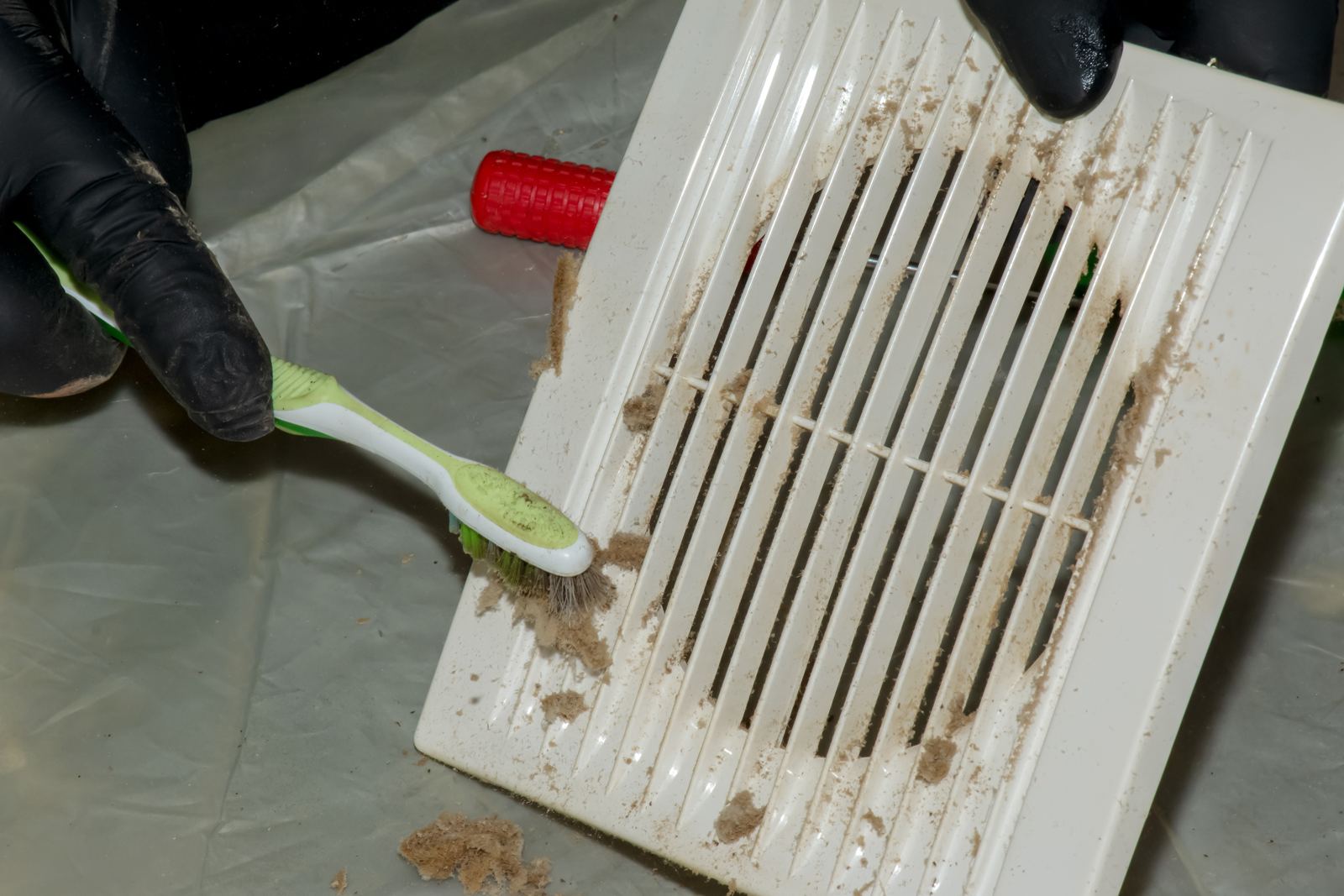
Dryer vent cleaning removes combustible lint from the exhaust duct running from your dryer to the outdoors. The U.S. Fire Administration counts roughly 2,900 residential dryer fires each year, with failure to clean the leading contributing factor. DuctDove is a referral service: one toll-free call connects you with a local, independent vent tech — we perform no work ourselves.
📞 Call (866) 370-5390Find your cityHere is how a dryer vent visit goes wrong. A tech arrives for a simple cleaning, shows you a phone photo of a lint-packed duct — sometimes not your duct — and pivots to urgency: this is a fire waiting to happen, it has to be handled today, and while we are here the whole house needs duct cleaning too. The real statistics get borrowed as a pressure tool. Your counters are simple. Ask to see your actual vent before and after. Ask why any recommended repair is needed and to see the section of duct in question — plastic flex and screened caps are visible facts, not stories. And remember the honest version of the fire data: it supports scheduled cleaning, not same-day panic spending.
Once a year is the standard baseline, and NADCA and most dryer manufacturers land in the same place. Households that run laundry daily, dry heavy items like towels and bedding, or have pets that shed may need service every six months. Longer vent runs, runs with multiple elbows, and roof terminations clog faster, because lint has more surface to cling to and less airflow pushing it along. A practical habit: time a normal load now and then. When dry times creep past a single cycle, lint is probably restricting airflow. If you would rather have a professional assess it, DuctDove connects you with a local, independent dryer vent tech through one toll-free call. We are a referral service — we do not perform the work ourselves, and we say so plainly.
The U.S. Fire Administration reports roughly 2,900 clothes dryer fires in residential buildings each year. Both the USFA and the NFPA identify failure to clean as the leading contributing factor in those fires. Those are the established figures, and they are worth stating plainly and without embellishment: lint is combustible, it accumulates inside vents, and removing it addresses the factor fire agencies cite most often. It is also worth noting what the data does not say. It does not mean every dryer is a hazard, and it does not justify pressure tactics at your door. A dryer with a short, clear, rigid metal vent that gets cleaned on a reasonable schedule is doing exactly what the fire-safety guidance asks. Annual cleaning is the response the numbers support — nothing more dramatic than that.
The clearest sign is time: loads that used to dry in one cycle now need two. Restricted airflow keeps moist air in the drum, so clothes come out damp and unusually hot. Other signs include a laundry room that gets noticeably warm while the dryer runs, a faint burning or hot-lint smell, lint collecting around the door seal or behind the machine, and an exterior flap that barely opens when the dryer is on. Some dryers flag the problem themselves — many newer models display an airflow or vent-blockage warning. None of these signs mean an emergency is underway; they mean the vent is due for attention. If two or more show up together, that is a sensible moment to call and have a local tech take a look.
The standard method pairs a rotary brush with moving air. The tech feeds a flexible rod with a spinning brush head through the duct, loosening compacted lint from the walls, while a vacuum or forced-air setup carries the debris out of the run rather than deeper into it. Good techs work the vent from both ends when access allows — from behind the dryer and from the exterior termination — and they clean the termination hood itself, where lint mats against the flap or cap. Afterward, they should reconnect the transition duct properly and verify airflow at the exterior with the dryer running. If someone proposes cleaning only what they can reach by hand from one end, that is a partial job on a duct that clogs along its full length.
Airflow is the whole game in a dryer vent, and every foot of duct and every elbow costs some of it. The International Residential Code caps the developed length of a dryer exhaust at 35 feet, with deductions for each bend, precisely because long runs move air too weakly to carry lint out. Kinks are worse than length: a crushed or sharply bent section of flexible duct creates ridges where lint snags and compacts, narrowing the passage a little more with each load. Runs that snake through crawl spaces, attics, or multiple floors deserve more frequent cleaning and, ideally, an upgrade to smooth rigid metal. A tech who measures your run and counts the elbows before quoting is doing the job the code assumes.
Roof terminations are the hardest vents to keep clear, for a simple reason: nobody sees them. Lint rides warm, moist air upward, cools at the cap, and mats against it. Caps with built-in screens clog fastest, since mesh catches lint by design. Homeowners can check a wall termination from the yard; a roof cap requires a ladder, fall risk, and often a specific cap tool, which is why these vents routinely go years without attention. If your laundry room sits in the middle of the house with no exterior wall nearby, assume a roof termination until proven otherwise. Tell us that when you call — DuctDove will match you with a local tech who is equipped for roof work, and the tech will confirm the routing on site before quoting.
Yes. Booster fans get installed on long runs to compensate for weak airflow, and they become lint collectors themselves. Lint cakes onto the impeller blades, unbalancing the fan and cutting the very airflow it was added to provide. Some models include a lint trap or a pressure-triggered switch, and both need periodic cleaning and testing per the manufacturer. There is a subtler issue worth naming: a booster can mask a developing blockage, keeping dry times tolerable while lint quietly packs the duct downstream. So a run with a booster should be cleaned on the shorter end of the schedule, and the fan housing opened and cleaned as part of the visit. Mention the booster when you call so we can refer a tech who services them.
Frequently. A dryer vent is a warm, dry, sheltered opening — attractive real estate in nesting season, especially when the exterior damper is stuck open or missing. Starlings and sparrows are the usual tenants. Signs include chirping or scratching near the vent, twigs or grass poking from the hood, and a sudden jump in dry times in spring. A nest is a full blockage sitting in a lint-lined duct, so it deserves prompt removal, and some situations involve wildlife rules — active nests of certain species are federally protected, which a responsible tech will check before removing anything. Afterward, the right fix is a code-compliant guard or damper, not a fine mesh screen; screens trap lint and trade a bird problem for a chronic clog.
The basics are consistent across jurisdictions that follow the International Residential Code. Concealed dryer ducts — the run inside walls, floors, or ceilings — must be smooth rigid metal, typically 4-inch, joined without screws that protrude into the airstream, because protruding screws snag lint. The short visible connector between the dryer and the wall is called a transition duct, and it must be a listed product (UL 2158A); semi-rigid aluminum is the common compliant choice. Thin foil flex is acceptable only as a listed transition duct, never inside walls, and white plastic flex duct is out of code entirely and should be replaced on sight. If a tech finds plastic or crushed foil during a cleaning, replacing that section is a legitimate recommendation — ask to see the material and you can verify it yourself.
They are separate services on separate systems. Air duct cleaning addresses the supply and return ductwork of your heating and cooling system — a branching network throughout the house. Dryer vent cleaning addresses a single exhaust run from one appliance to the outdoors, with different tools, different code requirements, and usually a much shorter visit. Dryer vent cleaning stands on its own: you do not need whole-house duct cleaning to justify it, and the fire-safety case for it is documented by the USFA in a way that routine duct cleaning is not. Some techs offer both, and bundling can be convenient when both are genuinely due. Just decide each service on its own merits. When you call DuctDove, tell us which one you actually want and we will refer accordingly.
For a straightforward run — a first-floor laundry with a short wall termination — the visit is often under an hour, including setup, cleaning from both ends, and an airflow check. Complications add time in predictable ways: roof terminations require ladder or roof access, nest removal is slow careful work, boosters need to be opened and cleaned, and a crushed or non-compliant section may warrant replacement on the spot. A tech who quotes a time range after seeing the routing is being straightforward; one who promises a ten-minute job on any house is planning a quick pass from one end. Ask what the visit includes — both ends of the run, the termination hood, and a verification of airflow with the dryer running are reasonable expectations for a complete job.
One toll-free call, and we do exactly one thing with it: match you with a local, independent dryer vent tech who serves your area. DuctDove performs no cleaning, employs no technicians, and takes no cut of add-ons — we are a referral service and we say so everywhere on this site. On the call, mention what you know: where the dryer sits, whether the vent exits a wall or the roof, how old the house is, and any signs like long dry times or a bird you have heard in the wall. Those details help us route you to a tech equipped for the actual job. The tech scopes the vent on site, quotes before working, and you decide. If anything about the visit feels off, our upsell-watch notes below tell you what to look for.
Call our toll-free line and describe your situation — long dry times, a roof termination, a suspected nest, or a vent that is simply overdue.
We match you with a local, independent dryer vent tech from our vetted list. DuctDove performs no work itself, and we say so plainly.
The tech scopes the job on site — run length, elbows, termination type, duct material — and gives you a clear quote before any work begins.
The work gets done right: rotary brush with airflow extraction, both ends of the run, termination hood cleaned, and airflow verified when finished.
There is no published safe threshold — any accumulation restricts airflow, and restricted airflow is how heat builds. The USFA identifies failure to clean as the leading factor in dryer fires, which is why the practical guidance is a schedule, not a measurement: annual cleaning, sooner for heavy use or long runs.
Short, straight runs with a wall termination are reasonable DIY territory using a brush kit and a vacuum. Long runs, multiple elbows, roof terminations, booster fans, and nest removal are where DIY tends to compact lint deeper instead of removing it. Know your routing before deciding, and call for the hard cases.
Call our toll-free line and we will match you with a local, independent dryer vent tech who serves your address. That is the whole DuctDove model — one call, one referral, full disclosure that we perform no service ourselves. Tell us your termination type and any symptoms so we route you well.
No. The lint screen catches only a fraction of what a load sheds; the rest travels into the duct and settles wherever airflow slows — elbows, kinks, and the termination. Clean the screen every load, absolutely, but treat the duct as a separate item with its own annual schedule.
Walk the exterior walls near your laundry area and look for a 4-inch hood with a flap. If none exists and the laundry sits in the interior of the house, the run almost certainly goes up. A tech can confirm routing on site; mention the uncertainty when you call and we will refer someone equipped for roofs.
Inside walls, floors, or ceilings — yes, concealed dryer ducts must be smooth rigid metal under the International Residential Code. Foil flex is permitted only as a short, listed transition duct between the dryer and the wall. White plastic flex is out of code everywhere and worth replacing whenever it turns up.
Not every tech carries ladders and roof-rated equipment, which is exactly why we ask about your termination when you call. DuctDove refers you to a local, independent tech whose setup matches the job. We do no work ourselves — the referral, and honesty about the routing, is what we provide.
A complete visit covers the full run: rotary brush with vacuum or forced-air extraction, work from both ends where access allows, the termination hood itself, reconnection of the transition duct, and an airflow check with the dryer running. If a quote covers only what is reachable from behind the machine, it is a partial job.
Doubled dry times are the classic symptom of a restricted vent. Moist air cannot leave the drum fast enough, so the dryer runs longer and hotter to do the same work. Rule out an overloaded drum and a dirty lint screen first; if times stay long, the duct is the likely culprit.
Yes, in mundane ways: thermal fuses trip, heating elements cycle harder, and moisture sensors misread, all of which shorten appliance life and cause nuisance shutdowns. Several manufacturers condition warranty coverage on proper venting. Cleaning the vent is cheaper than chasing intermittent dryer faults caused by a duct problem.
Scoped inspection, written quote, no scare-sell.
📞 (866) 370-5390🌀 Air Duct Cleaning❄️ HVAC Coil Cleaning🌬️ Furnace & Blower Cleaning🧰 Duct Sealing🔧 Duct Repair & Replacement🧱 Duct Insulation🍃 Sanitizing & Deodorizing🔍 Air Duct Inspection🏗️ Post-Construction Cleanup🏢 Commercial Duct Cleaning🧾 Duct Cleaning Cost Factors
 DuctDove