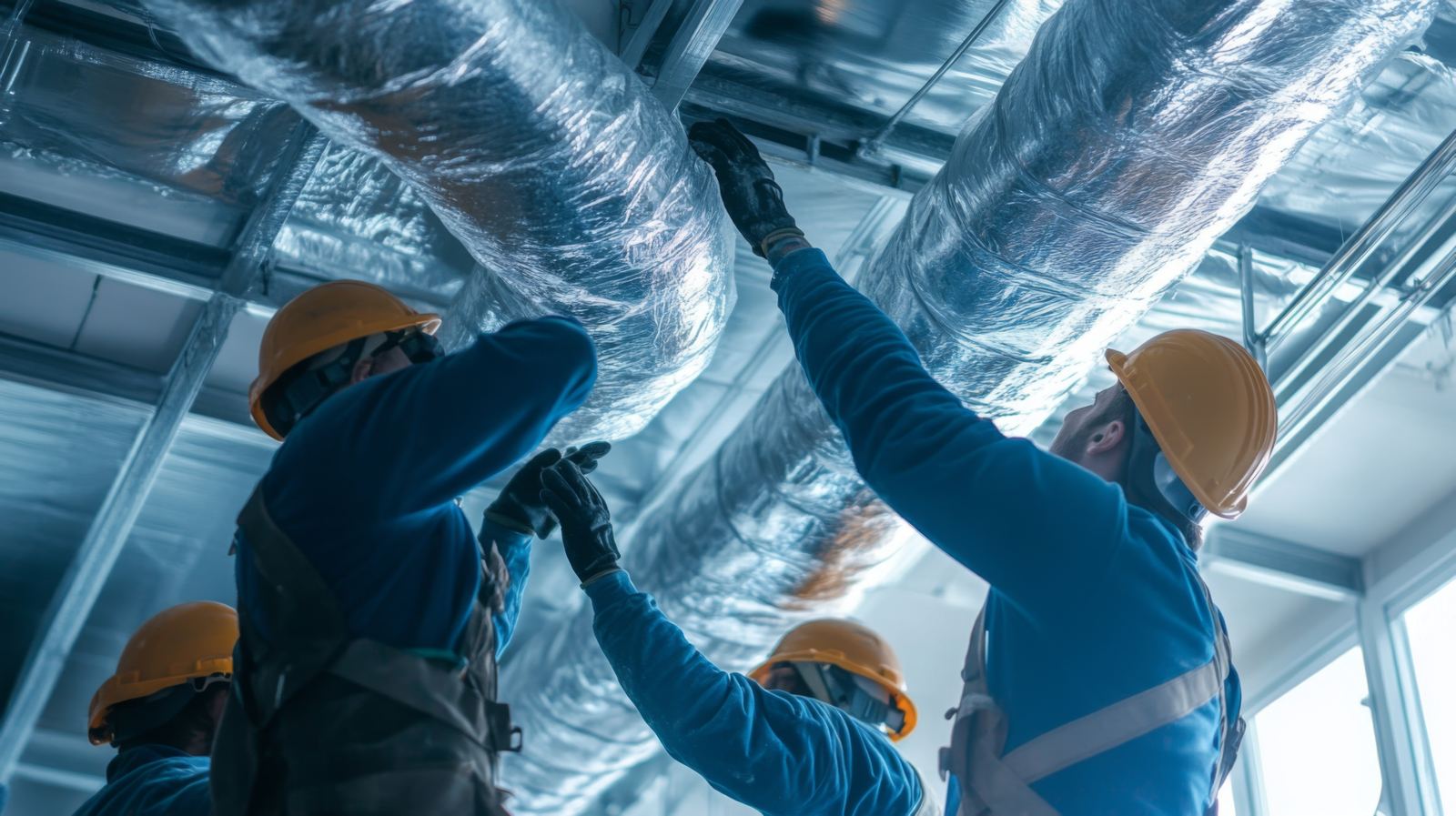
Duct insulation slows heat gain and loss on runs through attics, crawlspaces, and garages, and helps prevent condensation on cold ducts in humid climates. It works best paired with sealing, since insulation cannot stop air leaks. DuctDove is a referral service: one toll-free call connects you with a local, independent duct technician. We perform no work ourselves.
📞 Call (866) 370-5390Find your cityHow duct insulation goes wrong: the classic shortcut is wrap-and-run, meaning insulation sold and installed without sealing the leaks underneath, which buries problems where nobody will see them for years. Watch for quotes produced without anyone entering the attic or crawlspace, since insulation scope is inherently visual. Watch for vague materials, with no stated R-value and no mention of vapor barrier or seam sealing, and for blankets cinched so tight they are compressed flat, which quietly deletes the R-value you paid for. In humid climates, be wary of anyone treating dripping ducts as purely an insulation sale when the crawlspace itself is wet. A fair proposal names the runs, the R-value, the seam method, the sealing plan, and includes photos of finished work in spaces you cannot easily check.
Duct insulation slows the transfer of heat between the air inside your ducts and the space they pass through. In summer, it keeps attic heat from warming the cooled air on its way to your rooms; in winter, it keeps heated air from bleeding warmth into a cold crawlspace. It also raises the surface temperature of cold ducts, which is what prevents condensation from forming on them in humid weather. What it does not do is stop air leaks; insulation wrapped over a leaky joint just hides the leak. That is why the honest sequence is seal first, insulate second. Insulation is quiet, unglamorous work with no moving parts, which is exactly why it tends to be skipped by companies selling flashier services and overlooked by everyone else.
Because those spaces run at outdoor-adjacent temperatures while your ducts try to deliver conditioned air through them. A vented attic can sit far above the summer outdoor temperature under a hot roof; a winter crawlspace hovers near the cold ground. Every foot of poorly insulated duct in those spaces trades heat with them, so air arrives at the register warmer than it should in summer and cooler in winter, and the equipment runs longer to compensate. ENERGY STAR identifies ducts in attics, crawlspaces, and garages as the priority for both sealing and insulating. Ducts inside conditioned space face much smaller temperature differences, which is why an honest tech focuses the insulation budget where the ducts actually suffer, not evenly across the whole system.
Sweating is condensation: when a duct surface is colder than the dew point of the surrounding air, moisture condenses on it the way it does on a cold glass in summer. Cooling ducts run cold by design, and in humid climates the air in a crawlspace or attic carries enough moisture that a bare or thinly insulated duct crosses the dew point constantly. The dripping that results can soak duct insulation, stain ceilings, dampen framing, and rust metal components over time. The remedy is raising the surface temperature with adequate insulation wrapped in an intact vapor barrier, and fixing any air leaks that pull humid air against cold surfaces. In persistently damp crawlspaces, the tech may also point out moisture problems the ducts are merely reporting.
R-value measures resistance to heat flow; higher numbers insulate better. Duct insulation commonly comes in ratings from around R-4 up to R-8 and beyond, and building codes in much of the country require the higher values, often R-8, for ducts in unconditioned spaces like attics, with lesser requirements elsewhere. The right number for your house depends on climate and on where the runs are: an attic duct in a hot, humid region deserves more than a short run in a mild basement. Rather than memorizing tables, ask the technician two things: what your local code requires for each duct location, and what they would install in their own house there. Insulation is a small part of any duct project, so skimping on R-value to shave a quote is a false economy.
Yes, every time, and this ordering is worth being stubborn about. Insulation slows heat moving through the duct wall; it does nothing about air escaping through gaps, and wrapping a leaky joint buries the leak where nobody will find it until the insulation comes back off. Sealing first also protects the insulation itself, since escaping cold air can create condensation inside the wrap. ENERGY STAR's guidance for ducts in unconditioned spaces is to seal and then insulate, in that order. Practically, this means an insulation quote should either include sealing of accessible joints or state plainly that the system was already sealed and tested. If a company proposes wrapping your ducts without a word about leakage, they are insulating problems into place.
The everyday workhorse is fiberglass duct wrap: blanket insulation with a foil or vinyl facing that acts as a vapor barrier, wrapped around metal ducts and taped at the seams. Rigid fiberglass or foam board suits rectangular trunks and plenums where a wrap will not sit well. Flex duct arrives with insulation built in, so the question there is the factory R-value and the condition of the outer jacket, not adding wrap. Specialty jobs use closed-cell products or insulated sleeves. Two details separate careful work from fast work: seams sealed so the vapor barrier is continuous, which is critical in humid climates, and insulation that is snug without being compressed, since crushing the blanket lowers its effective R-value. Ask what facing and seam-sealing method the tech intends to use.
The rooms at the far ends of long runs benefit most. Air that travels forty feet through a blazing attic arrives noticeably warmer in summer than air that travels eight feet, which is one reason distant bedrooms lag the thermostat. Insulating those long runs delivers air closer to the temperature the equipment produced, narrowing the gap between rooms without touching the equipment at all. The effect is a steadier, quieter kind of improvement: fewer degrees lost in transit, shorter run times, less of the late-afternoon struggle on hot days. It will not overcome undersized ducts or big leaks, and an honest technician will say so rather than promise transformation. Think of insulation as protecting what your system already makes, not adding capacity it never had.
Often, but not always, and the exceptions matter. If sweating comes from a duct surface running below the dew point, proper insulation with an intact vapor barrier usually ends it. But if humid air is leaking into contact with cold surfaces through gaps in the duct or in the old wrap, sealing has to come first or moisture will keep finding the cold spot. And if the crawlspace itself is saturated, with standing water, no ground vapor barrier, or blocked drainage, duct insulation is treating a symptom while the space stays wet. A thorough tech looks at the whole moisture picture: where the water comes from, what surface it condenses on, and whether the fix belongs on the duct, the joints, or the crawlspace. Beware one-product answers to moisture questions.
It starts with an inspection, not a roll of wrap. The technician walks the accessible runs, notes which pass through unconditioned space, checks the condition of existing insulation and flex jackets, and looks for the leaks that should be sealed first. You get a written scope: which runs, what material and R-value, how seams and vapor barriers will be handled, and whether sealing is included or already done. The work itself is methodical, with wrapping, taped seams, securing without compressing, and re-supporting runs where straps have failed. A conscientious tech photographs before and after, since most of this work happens where you will never look. Expect a visit measured in hours for typical homes, longer where access is tight or the system is large.
Go look, if access is safe; this one is refreshingly visual. Bare sheet metal in an attic or crawlspace is the clearest case. Wrap that is torn, hanging loose, flattened, or dark with old moisture stains has lost much of its value. Flex duct with a shredded outer jacket and exposed insulation is failing. From inside the house, the clues are indirect: supply air that feels weak and warm in summer at distant registers, rooms that track the outdoor temperature more than the thermostat, and drips or stains below duct runs in humid weather. None of these clues is proof by itself, which is why a technician confirms with eyes on the ducts before quoting. If a company quotes insulation without anyone entering the attic or crawlspace, that is a guess wearing a price.
Usually not as a priority, and an honest answer here is a good test of your technician. Ducts inside conditioned space, whether in dropped ceilings, between floors, or in a finished basement, face small temperature differences, so the heat they trade mostly stays in the house. Codes accordingly require little or no insulation there. Exceptions exist: cooling ducts passing through a humid but conditioned basement can still sweat, and ducts in semi-conditioned mechanical rooms sit somewhere in between. But if every duct you own lives inside the envelope, the better spend is usually sealing, balancing, or repair. A tech who recommends wrapping interior ducts while your attic runs sit bare has the priorities inverted, and you are allowed to say so.
DuctDove is a referral service, and we say it plainly and often: we insulate nothing ourselves. One call to our toll-free number, a few questions about where your ducts run and what you have noticed, and we connect you with a local, independent technician who does insulation and sealing work in your area. That tech inspects in person, explains what they find, and quotes in writing; you decide with no obligation. We may be compensated for the referral, at no cost to you and with no effect on the quote. We prefer techs who talk about sealing and insulation together, cite the R-values they install, and photograph work done in places you will never crawl.
Call the toll-free number and tell us where your ducts run, whether attic, crawlspace, or garage, and what you have noticed, from sweating ducts to lagging rooms.
We match you with a local, independent technician who handles duct insulation and sealing. DuctDove performs no work itself.
On site, the tech inspects the runs, checks existing insulation and leakage, and writes a quote naming materials and R-values.
The work is done right: sealed first where needed, wrapped snugly with vapor barriers intact, and photographed so you can see it.
Call DuctDove's toll-free number and we will connect you with a local, independent technician who insulates and seals ductwork near you. We are a referral service and perform no work ourselves. The tech inspects your runs in person, quotes in writing, and you decide with no obligation.
Codes in much of the country call for R-8 on ducts in unconditioned attics, with lower requirements in milder locations and other spaces. Your technician should cite the local requirement rather than a national guess. Climate and duct location drive the answer more than any single rule of thumb.
The duct surface is colder than the dew point of the surrounding air, so moisture condenses on it like a cold glass in summer. Causes include missing or soaked insulation, gaps in the vapor barrier, air leaks pulling humid air onto cold metal, or a very damp crawlspace. An inspection sorts out which.
Seal first, insulate second, always in that order. Insulation cannot stop air escaping through gaps, and wrapping a leaky joint hides it for years. ENERGY STAR's guidance for ducts in unconditioned spaces is to seal and then insulate. A quote that includes both, in that order, is a good sign.
Accessible metal runs in a basement or open attic are within reach of a careful homeowner using faced duct wrap with taped seams. The details are what a local pro earns their keep on: sealing joints first, keeping the vapor barrier continuous, and not compressing the blanket. Tight crawlspaces strongly favor hiring out.
It reduces the heat your ducts trade with unconditioned spaces, so the equipment runs less to deliver the same comfort. That is a real effect, biggest on long attic and crawlspace runs. How large depends on climate, duct location, and current condition, so treat any promised percentage with suspicion.
Duct specialty companies, insulation contractors, and many HVAC firms all do this work. DuctDove shortens the search: one toll-free call and we refer you to a local, independent technician who handles duct insulation and the sealing that should come first. The referral is disclosed and the quote carries no obligation.
Yes. Flex duct comes with factory insulation between its inner liner and outer jacket, at a rated R-value. The questions are whether that R-value suits your climate and location, and whether the jacket is still intact. Torn jackets and compressed sections lose performance, and badly degraded flex is usually replaced rather than re-wrapped.
It helps most for rooms fed by long runs through a hot attic, where cooled air picks up heat in transit. It will not overcome crushed ducts, big leaks, or undersized returns. A technician can tell you which factor dominates your lagging room; the fix should match the cause, not the catalog.
The facing, usually foil or vinyl, on duct wrap blocks humid air from reaching the cold duct surface beneath. If seams are left untaped or the facing is torn, moisture gets past the insulation and condenses anyway, soaking the blanket. In humid climates the vapor barrier is not optional detailing; it is the point.
Scoped inspection, written quote, no scare-sell.
📞 (866) 370-5390🌀 Air Duct Cleaning🔥 Dryer Vent Cleaning❄️ HVAC Coil Cleaning🌬️ Furnace & Blower Cleaning🧰 Duct Sealing🔧 Duct Repair & Replacement🍃 Sanitizing & Deodorizing🔍 Air Duct Inspection🏗️ Post-Construction Cleanup🏢 Commercial Duct Cleaning🧾 Duct Cleaning Cost Factors
 DuctDove